
What Should I Do if My Garage Door Is Making Unusual Noises?
What Should I Do if My Garage Door Is Making Unusual Noises?
By Precision Garage Door Services Editorial Team · Updated 2026-07-16
For What Should I Do if My Garage Door Is Making Unusual Noises?, noisy garage doors result from worn rollers, loose hardware. Insufficient lubrication on metal components. Tighten all bolts and hinges, replace nylon or steel rollers every 7 years. Apply a silicone-based lubricant to tracks and springs. Precision Garage Door Services in Naperville, IL recommends professional inspections for persistent grinding or squeaking.
Noisy garage doors typically result from loose hardware, improper installation. A broken opener, with worn rollers and dry hinges being the most common culprits. Fix the problem by lubricating all moving parts regularly and tightening loose components. Contact a professional like Precision Garage Door Services in Naperville, IL for accurate diagnosis and lasting repairs.
Noisy garage doors typically stem from two main culprits: the door itself or the opener. Loose hardware, worn components, and insufficient lubrication on moving parts are the most common causes. Addressing these sounds early prevents costlier repairs. Precision Garage Door Services, serving Chicago and surrounding areas, provides IDA-certified technicians for fast, professional diagnosis and repair.
Key Takeaways
- Noisy garage doors stem from two main culprits: the door itself or the opener mechanism.
- Loose hardware, improper installation, and broken openers cause most garage door noise issues.
- Lubricating moving parts and routine maintenance eliminate squeaks and groans effectively.
- Professional technicians at Precision Garage Door Services in Naperville, IL diagnose root causes accurately.
What Are the Most Common Causes of Garage Door Noise?
Garage door noises typically trace back to two main culprits: the door’s mechanical components or the opener unit itself. Improper installation, loose hardware, and a broken opener are among the most frequent sources of disruptive sounds.
Squeaks and groans are rarely just an annoyance. Those sounds are early warning signs of wear and tear that, left unaddressed, escalate into costly mechanical failures.
What Part of the Garage Door Is Making That Sound?
The noise source determines the repair approach. Common problem areas include:
- Loose hardware — bolts, hinges, and roller brackets that vibrate during operation
- Worn rollers — metal rollers grinding against the track instead of rolling smoothly
- Improper installation — misaligned tracks that force components to work against each other
- A broken or failing opener — internal gear wear or chain/belt tension issues that produce grinding or rattling
Does a Noisy Garage Door Always Mean a Serious Problem?
Not every noise signals an emergency, but no noise should be ignored. Minor squeaking often points to components that simply need lubrication or tightening. Persistent grinding or banging, however, indicates mechanical wear that worsens with every cycle. Precision Garage Door Service deploys IDA Certified Technicians trained to diagnose both the door. The opener accurately, backed by an industry-standard warranty. So customers get a durable fix, not a temporary patch.
How Do You Diagnose and Fix a Noisy Garage Door?
What should I do if my garage door is making unusual noises? Start by identifying whether the sound originates from the door itself or the opener — these two sources require different fixes. Ignoring early warning noises risks turning a minor maintenance task into a costly mechanical failure.
What Are the First Steps Homeowners Should Take?
Homeowners can resolve many common noise issues by working through a short diagnostic checklist before calling for service. Follow these steps in order:
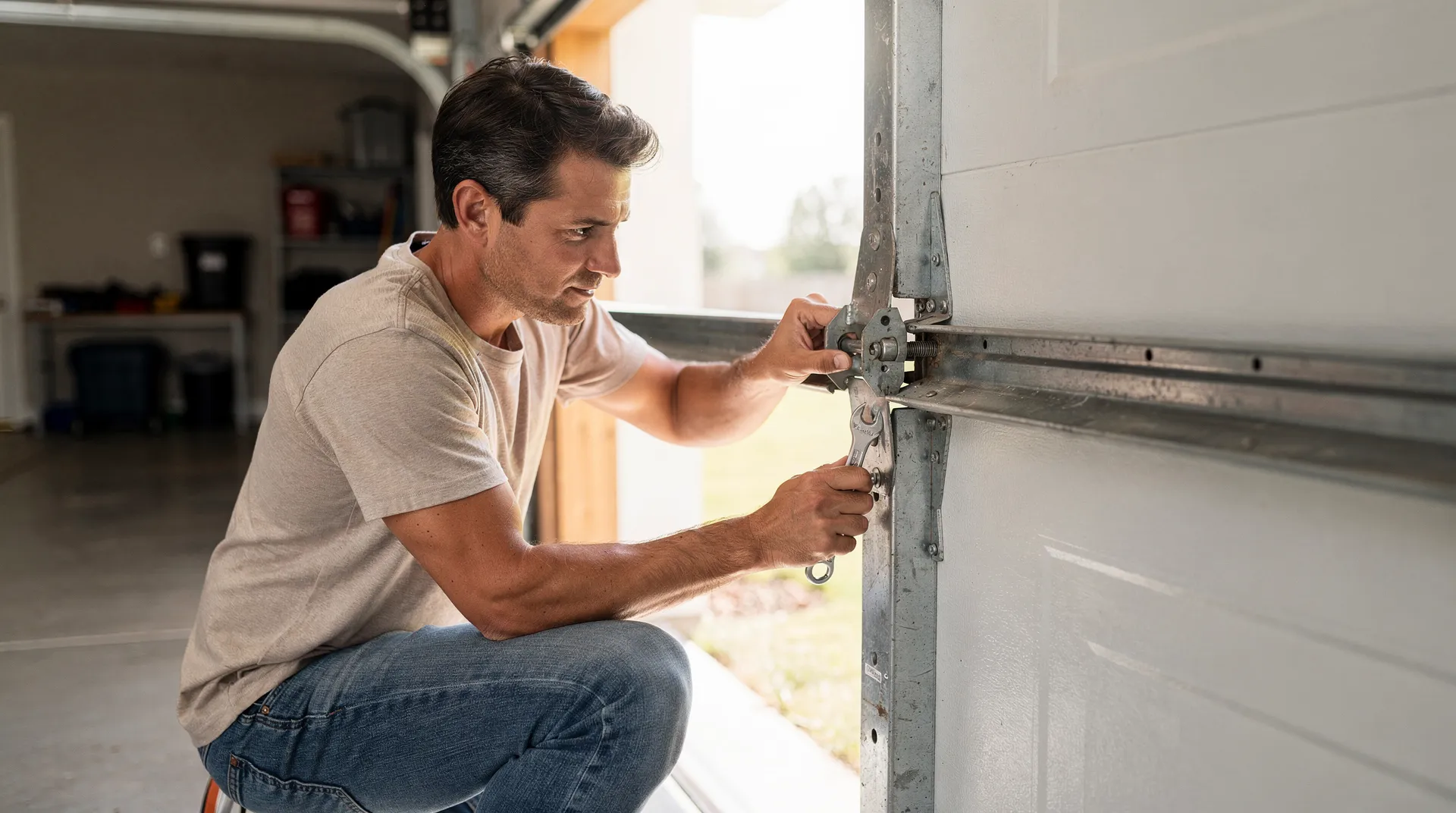
- Lubricate moving parts — Apply a garage-door-specific lubricant to hinges, rollers, and springs. Dry components grind and squeal under load.
- Tighten loose hardware — Inspect every bolt, nut, and bracket along the door’s track system. Vibration gradually loosens fasteners, and loose hardware amplifies noise with every cycle.
- Conduct routine maintenance — Check the tracks for debris, test the door’s balance, and inspect the weatherstripping for wear.
- Evaluate the opener type — Chain-driven openers operate with more mechanical noise than belt-driven models. Precision Garage Door Service offers both chain-driven openers and belt-driven openers, and upgrading to a belt-driven unit delivers noticeably quieter operation.
When Should Homeowners Call a Professional?
The root cause of garage door noise is not always visible or obvious to the untrained eye. A grinding sound, for example, could indicate a worn roller, a failing spring. A misaligned track — each requiring a different repair approach. Precision Garage Door Service technicians diagnose the exact source of the problem. Deliver an effective, lasting fix rather than a temporary patch. Phones are answered 24/7, so customers never have to wait to get expert help.
When Should You Call a Professional for Garage Door Noise?
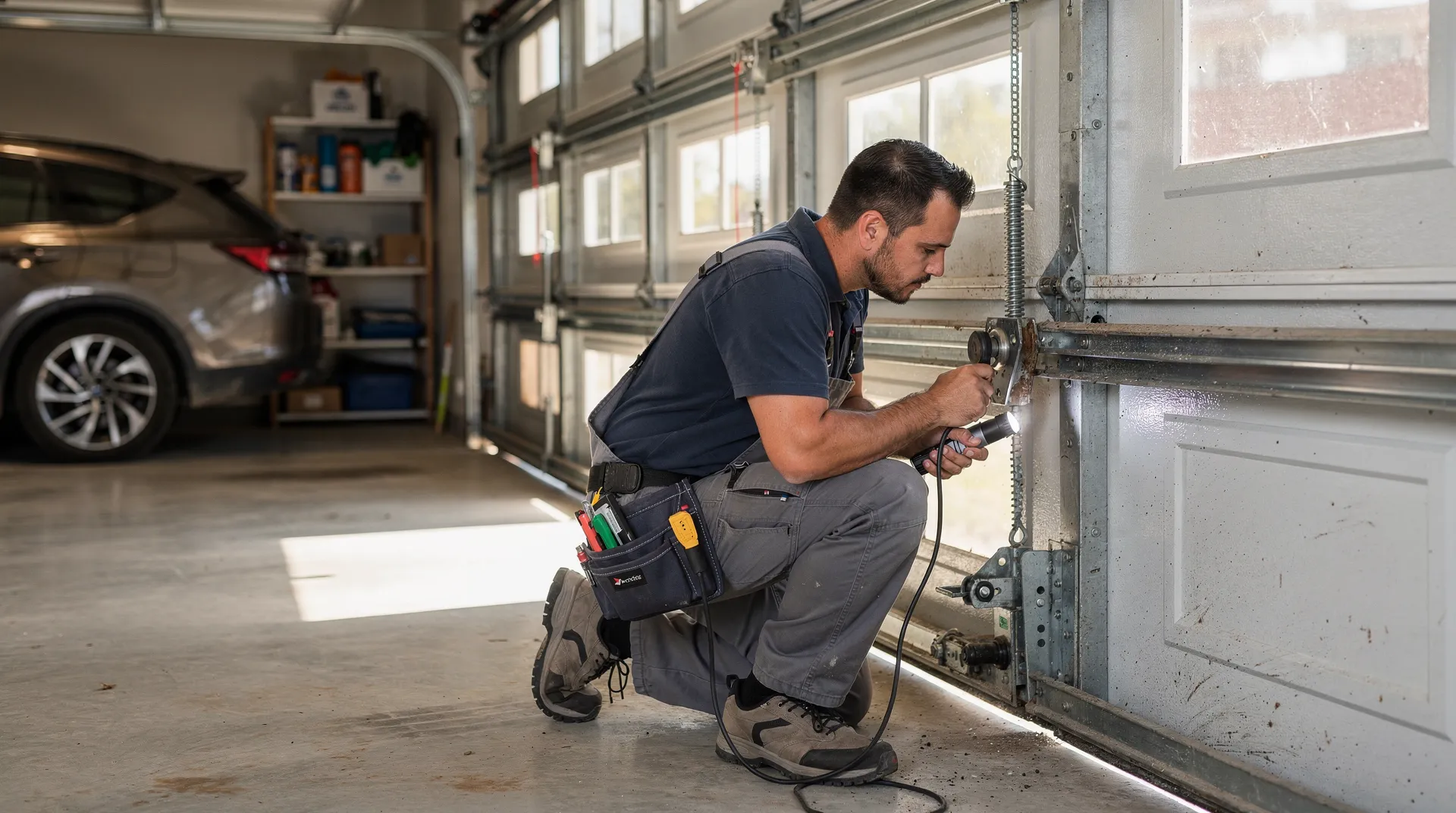
**** Garage door noises that persist after basic inspection signal a problem requiring professional diagnosis. Ignoring those sounds costs homeowners significantly more in repairs than early intervention ever would.
What Happens If Homeowners Delay Calling a Technician?
Unusual grinding, rattling, or squealing noises are early warnings of mechanical wear. Addressing garage door noise at the first sign of trouble prevents minor component issues from escalating into full system failures. And the costly repairs that follow.
How Quickly Can Precision Garage Door Service Respond?
Precision Garage Door Service offers same-day service for urgent garage door issues. Phones are answered 24 hours a day, so homeowners never wait until morning to report a problem. Evening and Saturday appointments provide additional scheduling flexibility for customers who cannot take time away from work.
Steps to take when unusual noise appears:
- Stop operating the door immediately to prevent further damage.
- Note the type of noise — grinding, rattling, or squealing — before calling.
- Contact Precision Garage Door Service, available 24/7, to schedule same-day diagnosis.
- Allow an IDA Certified Technician to inspect and resolve the root cause.
A noisy garage door signals that maintenance demands your attention. Whether the culprit stems from worn rollers, frayed cables. Inadequate lubrication, addressing these issues promptly preserves both the door’s operational integrity and your home’s peace. Professional inspection identifies the root cause and restores quiet, reliable performance. Taking action today prevents costlier repairs tomorrow and ensures your garage door functions as the dependable barrier it should be.
FAQ
Why is my garage door making noise?
Loose hardware, worn rollers, dry hinges, improper installation. A broken opener are the most common culprits behind garage door noise.
How do I fix a squeaky or grinding garage door?
Apply a garage-door-specific lubricant to hinges, rollers. Springs, then tighten loose bolts, brackets, and roller hardware to eliminate squeaks and grinding.
When do I call a professional about garage door noise?
Persistent grinding or banging indicates mechanical wear that worsens with every cycle. Precision Garage Door Services in Naperville, IL deploys IDA Certified Technicians for accurate diagnosis and lasting repairs.