Types of Garage Door Springs and Replacement
Types of Garage Door Springs and Replacement
By Precision Garage Door Services Editorial Team · Updated 2026-07-08
Garage door springs come in two main types: torsion springs, mounted above the door. Extension springs, running along the sides. Precision Garage Door Services in Naperville, IL recommends professional replacement for both types. Torsion springs store extreme tension and require specialized tools to safely install or swap out.
Garage door springs fall into two primary categories — torsion springs and extension springs. With torsion springs engineered in several distinct designs, including Standard Residential, EZ-SET, Torquemaster, Mini-Warehouse, and Steel Rolling Door variants. Replacement is a dangerous task requiring a professional, as broken springs often announce failure with a loud crash or bang.
Garage door springs fall into two primary categories: torsion springs and extension springs. Torsion springs mount above the door and offer superior balance and longevity. Extension springs run along the tracks on each side. Both types wear out over time and require replacement by IDA Certified Technicians, like those at Precision Garage Door Service.
Key Takeaways
- Garage door springs come in 2 main types: torsion springs and extension springs.
- Broken springs produce loud bangs and require professional replacement from trained technicians.
- Torsion and extension springs both counterbalance your door’s weight for effortless daily operation.
- Warning signs of failing springs include jerky movement, unusual noises, and difficulty opening doors.
What Are the Main Garage Door Spring Types?
Garage door springs fall into two primary categories: torsion springs and extension springs. Both spring types counterbalance the door’s weight, making smooth operation possible. Without functioning springs, lifting a garage door manually becomes nearly impossible — the door’s full weight transfers directly to the operator, creating both a physical and safety hazard.
How Many Garage Door Spring Types Exist?
Garage door spring types span multiple distinct designs across the two main categories. Torsion springs cover several engineered variants, while extension springs cover two.
What Happens When a Garage Door Spring Breaks?
A broken garage door spring renders the door effectively inoperable. The counterbalance system fails entirely, leaving the full door weight unsupported. Customers who delay garage door spring replacement risk damage to the opener motor, tracks, and cables. Compounding what could have been a straightforward repair into a far costlier service call. Garage door spring repair cost varies based on spring type and door configuration. Precision Garage Door Service technicians assess each system individually to recommend the correct replacement design. Scheduling service promptly protects the entire door system from cascading mechanical failure.
How Do You Identify a Broken Garage Door Spring?
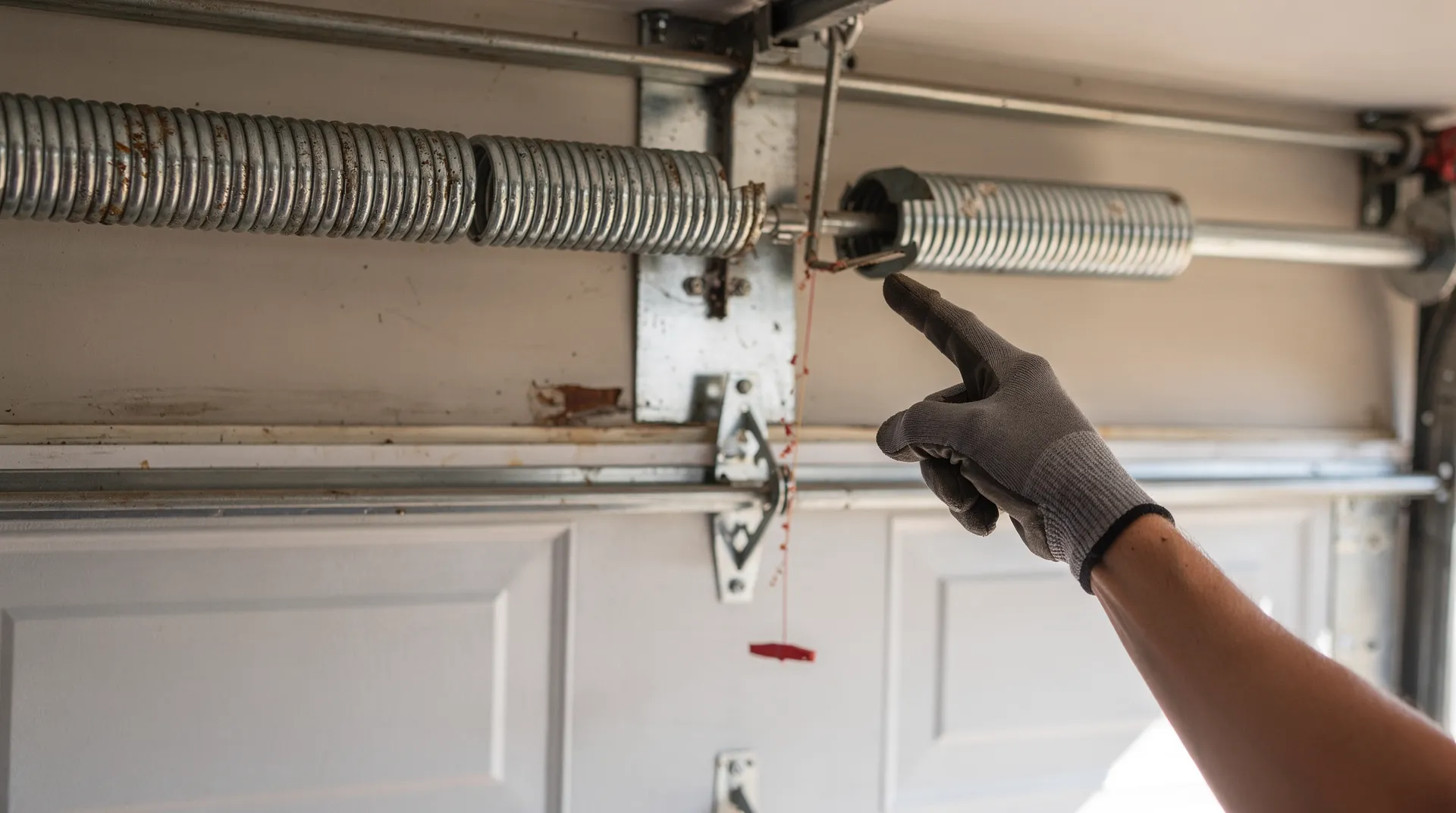
A broken garage door spring announces failure through specific, unmistakable warning signs. Recognizing garage door spring types — primarily torsion springs mounted above the door and extension springs running along the tracks. Helps homeowners pinpoint which component has failed.
Ignoring early warning signs turns a manageable repair into a safety emergency. Delaying garage door spring replacement risks door collapse, vehicle damage, or serious injury.
Watch for these warning signs:
- Jerky or uneven movement as the door opens or closes
- Unusual grinding or popping noises during operation
- Difficulty lifting the door manually, even partially
- A sudden loud crash or bang from inside the garage
What Does a Broken Garage Door Spring Sound Like?
A failing spring often produces a loud, startling crash or bang. A noise significant enough that homeowners frequently mistake it for a break-in. That sound signals the spring has snapped under tension and the door is no longer safely supported.
Is Garage Door Spring Repair a DIY Job?
Garage door spring repair is not a DIY project. The extreme tension stored in both torsion and extension springs poses serious safety risks to anyone without professional training. Garage door spring repair cost varies by spring type and door size, so contacting a qualified technician for an accurate assessment is the right first step. Precision Garage Door Service answers phones 24 hours a day and offers same-day service for urgent spring failures.
When Should You Schedule Professional Spring Replacement?
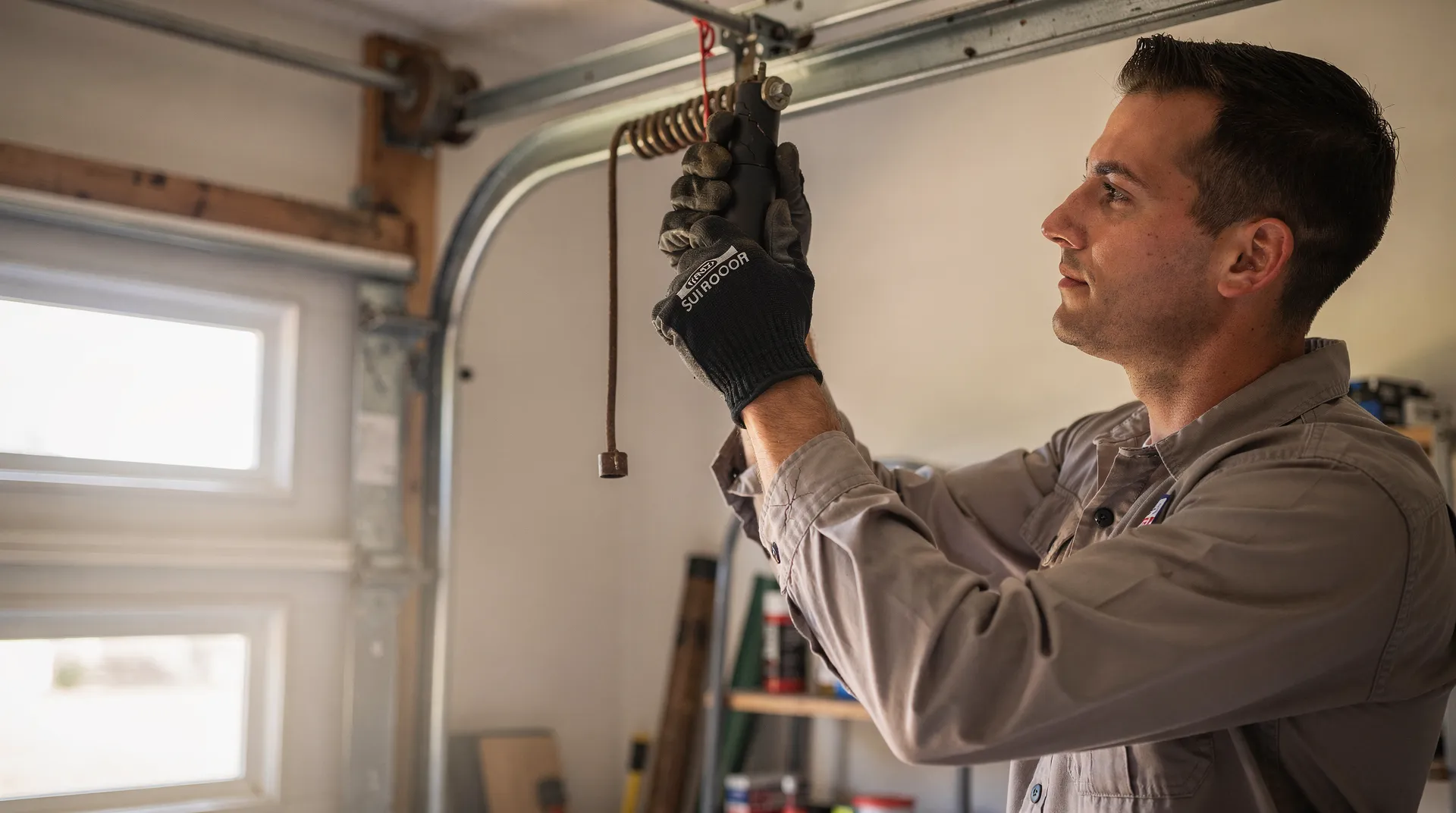
Garage door springs require professional replacement the moment visible damage, unusual noise, or door imbalance appears. Delaying service after a broken garage door spring is detected risks complete door failure and potential injury from the extreme tension stored in spring hardware.
Before contacting a technician, homeowners benefit from identifying their garage door spring types. Specifically whether the door uses torsion springs (mounted horizontally above the door opening) or extension springs (running parallel along the horizontal tracks). Knowing the spring category streamlines the diagnostic process and helps technicians arrive prepared.
What are the warning signs that springs need immediate replacement?
Jerky door movement, grinding sounds during operation. A door that feels unusually heavy when lifted manually all signal spring failure. Ignoring these symptoms transfers the full mechanical load to the opener motor, shortening its lifespan significantly.
How does professional spring replacement differ from DIY attempts?
Garage door spring replacement involves components under extreme mechanical tension — a risk that makes professional service the only safe path. Precision Garage Door Service deploys IDA Certified Technicians trained to the highest standard in the garage door industry, backed by an industry-leading warranty on repairs.
Customers scheduling garage door spring repair with Precision currently qualify for a New Document 3 saving pricing varies on the service. Understanding extension springs versus torsion springs before the appointment. And factoring in garage door spring repair cost against long-term door performance — helps customers make confident, informed decisions.
FAQ
What are the two main types of garage door springs?
Torsion springs mount above the door and offer superior balance and longevity. Extension springs run along the tracks on each side of the door.
What are the warning signs of a failing garage door spring?
Watch for jerky or uneven movement, unusual grinding or popping noises, difficulty lifting the door manually. A sudden loud crash or bang from inside the garage.
Why does a broken garage door spring require professional replacement?
Broken springs render the door inoperable. Leave the full door weight unsupported, requiring replacement by IDA Certified Technicians like those at Precision Garage Door Services in Naperville, IL.
For a broader look at maintaining your entire door system, see The Ultimate Homeowner’s Guide to Garage Door Repair & Troubleshooting.