What is a garage door torsion bar?
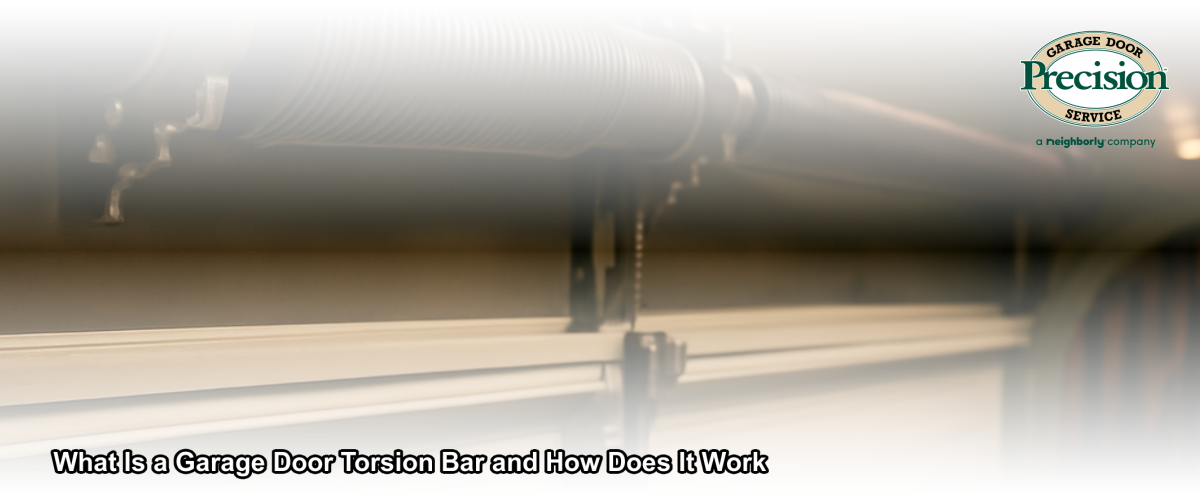
A garage door torsion bar — more precisely called the torsion shaft — is the horizontal steel rod that runs above your garage door opening, connecting the torsion springs, cable drums, and bearing plates into a single unified lifting system. When your garage door opens or closes, this shaft is the mechanical backbone that transfers the stored spring energy into coordinated, balanced movement.
Without the torsion bar, the springs on either side of your garage would act independently, causing the door to rack, bind, or lift unevenly. The bar ensures both sides of the door rise and fall as one. It is one of the most mechanically critical components in your entire garage door system.
How does a garage door torsion bar work?
The torsion bar works by storing and releasing rotational energy: when the door closes, the torsion springs wind tightly around the shaft, building tension; when the door opens, that tension unwinds and rotates the shaft, which turns the cable drums at each end and reels up the lift cables attached to the bottom corners of the door.
Here is what happens in sequence each time you open your door:
- The garage door opener or manual pull applies upward force.
- The wound torsion springs release energy by unwinding around the shaft.
- The rotating shaft turns the cable drums simultaneously on both sides.
- The lift cables wind onto the drums, pulling the door upward along the tracks.
- The door’s weight is counterbalanced by the spring tension — your opener motor does comparatively little of the actual lifting.
This counterbalancing effect is why a properly tuned torsion system allows most garage doors to be lifted with one hand. If your door feels unusually heavy, the torsion bar system — specifically the spring tension — is the first place to investigate.
What is the difference between a torsion bar and a torsion spring?
The torsion bar (shaft) is the steel rod the springs are mounted on, while the torsion springs are the coiled metal components that actually store the mechanical energy — they are two separate parts that work together as an assembly.
Many homeowners use the terms interchangeably, which can create confusion when diagnosing a problem. A broken spring means the coil itself has snapped, typically leaving a visible gap in the coil. A bent or damaged shaft is a less common but more serious issue that can affect the entire lifting system at once. Both require professional attention.
What size torsion bar does my garage door need?
Torsion shaft diameter is matched to door weight and spring torque requirements — residential doors in Chicago most commonly use a 1-inch diameter shaft, while heavier commercial or oversized residential doors may require a 1-1/4-inch or 1-1/2-inch shaft.
Length is equally important: the shaft must span the full width of the door opening plus extend far enough on each end to seat properly in the bearing plates. A shaft that is undersized for the door’s weight can flex or bow under load, creating noise, uneven travel, and accelerated wear on bearings and spring cones. Sizing should always be confirmed by a trained technician rather than guessed from measurements alone.
How does Chicago’s climate affect a garage door torsion bar and spring assembly?
Chicago’s extreme temperature swings — from well below freezing in January to humid summers above 90°F — place real stress on metal garage door components, and the torsion spring system is especially vulnerable to cold-weather performance changes.
Steel springs lose elasticity in sub-freezing temperatures, which is why spring failures spike during Chicago winters, particularly after rapid freeze-thaw cycles. The shaft itself can also develop surface rust faster in Chicago’s wet springs and salted-air winters near the lakefront. Precision Garage Door Chicago recommends a seasonal inspection before winter sets in to check spring tension calibration, lubricate the shaft’s bearing plates, and catch corrosion early before it compromises the assembly.
As covered in our maintenance guide, a light application of garage door lubricant to the springs and bearing plates in late October can meaningfully extend system life in Chicago’s climate. Never use WD-40 on torsion springs — it strips protective coatings and accelerates rust.
How long does a garage door torsion bar last, and when does it need to be replaced?
The torsion shaft itself is highly durable and can last the life of the door — often 20 to 30 years — under normal residential use, but the torsion springs mounted on it are rated by cycle count and typically last 10,000 cycles on standard residential springs, which works out to roughly 7 to 10 years for the average Chicago household.
Signs that your torsion bar assembly needs professional inspection or service include:
- A loud bang from the garage (classic sign of a broken torsion spring).
- The door only opens a few inches then stops.
- One side of the door rises faster than the other.
- Visible rust, scoring, or bowing on the shaft.
- Grinding or scraping sounds during operation.
A damaged torsion shaft is less common than a broken spring but considerably more complex to replace, as it requires full disassembly of the spring, drum, and cable system. This is not a DIY repair.
Can I replace a garage door torsion bar or torsion spring myself?
Torsion spring and shaft repairs are among the most dangerous DIY garage tasks a homeowner can attempt — torsion springs are wound under hundreds of pounds of torque, and improper handling can cause the shaft or spring to release violently, causing severe injury.
Precision Garage Door Chicago’s IDA Certified Technicians use calibrated winding bars, tension gauges, and safety protocols that are simply not replicated by improvised home tools. Beyond safety, improperly set spring tension will either overload your garage door opener motor or leave the door dangerously unbalanced. The cost of a professional spring replacement is almost always far less than the cost of opener or panel damage caused by an incorrectly tensioned DIY repair.
See our full guide to torsion spring replacement for a detailed breakdown of what the professional process involves and what to expect on service day.
What does it cost to replace a torsion bar or torsion spring in Chicago?
Torsion spring replacement in Chicago typically ranges from $150 to $350 for a single spring on a standard residential door, and $250 to $450 for a double-spring system — both figures include parts and labor from a qualified technician.
If the torsion shaft itself needs replacement (due to bending, corrosion, or damage from a failed spring), expect the total repair cost to be higher, generally in the $300 to $600 range depending on door size and shaft diameter required. Shaft replacement is quoted as part of a full spring assembly service, not as a standalone part swap.
What is typically included in a torsion spring service call?
A professional torsion spring replacement from Precision Garage Door Chicago includes removal of the broken spring, installation of the correct replacement spring calibrated to your door’s exact weight, inspection of the shaft, drums, and cable condition, and a door balance test before the technician leaves. Any additional worn components — frayed cables, cracked bearing plates — are flagged and can be addressed in the same visit to avoid a second call.
This guide was prepared by Precision Garage Door Chicago’s IDA Certified Technicians, serving Chicago, IL and the surrounding metro area.
Frequently Asked Questions
What is a garage door torsion bar?
A garage door torsion bar is the horizontal steel shaft mounted above the garage door opening that holds the torsion springs, cable drums, and bearing plates together. It transfers spring energy into coordinated, balanced movement as the door opens and closes.
Is a torsion bar the same as a torsion spring?
No — the torsion bar is the steel shaft the springs are mounted on, while the torsion springs are the coiled components that store mechanical energy. They work together but are separate parts with different lifespans and failure modes.
How do I know if my torsion bar or spring is broken?
Common signs include a loud bang from the garage, a door that only opens a few inches before stopping, one side rising faster than the other, or visible rust and bowing on the shaft. A broken torsion spring often leaves a visible gap in the coil.
How much does torsion spring replacement cost in Chicago?
In Chicago, torsion spring replacement typically costs between $150 and $350 for a single spring or $250 to $450 for a double-spring system, including parts and labor. Shaft replacement, when needed, generally brings the total to $300–$600.
Can I replace a garage door torsion spring myself?
Torsion spring replacement is not recommended as a DIY repair. The springs are wound under hundreds of pounds of torque and can release violently if mishandled, causing serious injury. Precision Garage Door Chicago’s IDA Certified Technicians have the calibrated tools and training to do this safely.