What is the difference between a single and a double garage door?
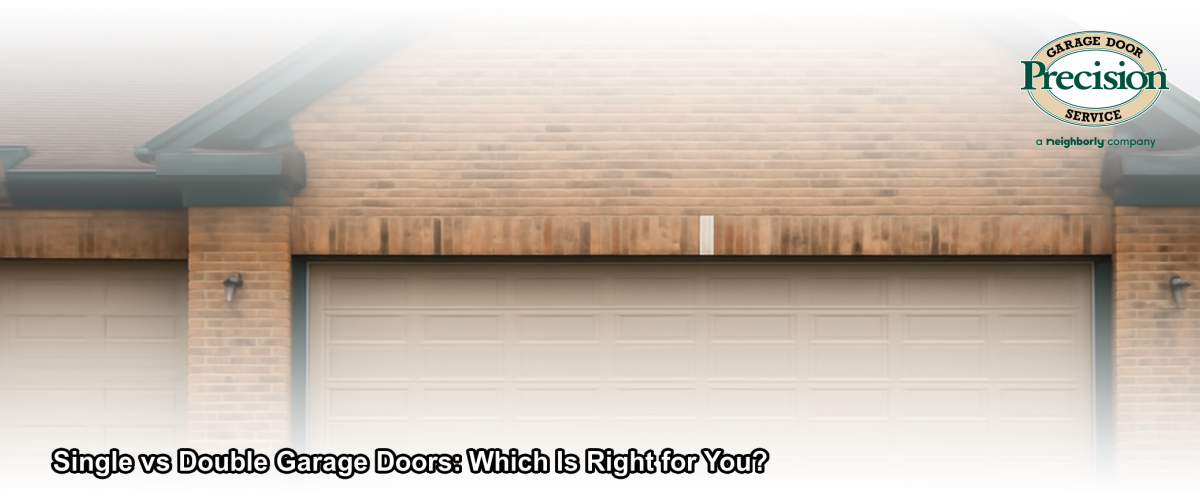
A single garage door typically covers one car-width opening, measuring roughly 8 to 9 feet wide and 7 to 8 feet tall, while a double garage door spans a two-car opening at 16 to 18 feet wide with the same standard heights. The choice between the two shapes everything from your driveway layout and curb appeal to your long-term maintenance costs.
Most Chicago-area homes built before the 1970s were designed with single-car garages, while newer construction in suburbs like Naperville, Schaumburg, and Oak Park increasingly features double openings. Understanding which configuration fits your structure — and your lifestyle — is the first step before any installation or replacement project.
How much does a single garage door cost in Chicago compared to a double?
In the Chicago area, a professionally installed single garage door typically runs $700 to $1,500, while a double garage door installation generally ranges from $1,200 to $2,800, depending on material, insulation rating, and hardware selections. Labor and disposal of the old door are included in Precision Garage Door Chicago’s installation quotes.
Material choice is the biggest cost driver within each category. A basic steel single door sits at the lower end of that range, while a custom wood or carriage-house double door pushes toward the top. Insulated doors — strongly recommended for Chicago winters where temperatures regularly drop below 0°F — add roughly $150 to $400 to either configuration.
As covered in our full guide to garage door replacement costs, hidden charges to watch for include header framing modifications (often needed when converting from two single openings to one double), new track hardware, and spring system upgrades sized to the door’s weight.
What are the hidden costs of switching from two single doors to one double door?
Converting two single openings into one double garage door requires removing the center structural post — a framing modification that can add $300 to $800 in carpentry and permitting costs beyond the door itself. This is one of the most commonly overlooked expenses Chicago homeowners face when making this switch.
Additional costs to budget for include:
- Header beam replacement or reinforcement to span the wider opening
- A new torsion spring system sized for the heavier double door
- Drywall, trim, and paint work on the interior framing
- Potential permit fees through the City of Chicago or your municipality
If your existing opener is more than 8 to 10 years old, this is also the right moment to upgrade — a double door’s added weight often exceeds the lift capacity of older single-door openers. Precision Garage Door Chicago’s IDA Certified Technicians assess structural compatibility before any conversion project begins, so there are no surprise costs after demo starts.
Which garage door configuration is better for Chicago’s climate?
For Chicago’s climate — characterized by deep freeze cycles, heavy snowfall, and significant temperature swings between seasons — an insulated single door with a high R-value often outperforms a non-insulated double door for energy retention. That said, the more important factor is insulation quality, not door width.
Double doors have a larger surface area exposed to the elements, which means a low-insulation double door will shed more heat in January than a comparably priced single door. Chicago’s average January low of around 14°F makes a minimum R-12 insulation rating the practical baseline for any attached garage, regardless of door size. Doors with polyurethane foam cores (rather than polystyrene) provide superior thermal performance and added structural rigidity — a real advantage when Lake Michigan wind gusts hit the North Side or the western suburbs.
Weatherstripping quality and bottom seal condition matter just as much as R-value in Chicago winters. See our maintenance guide on seasonal garage door upkeep for what to inspect before the first hard freeze.
Is a double garage door harder to maintain than two single doors?
A double garage door has fewer total mechanical components than two separate single doors running on independent tracks, springs, and openers — which can actually simplify routine maintenance. However, the single torsion spring on most double doors handles significantly more tension, and a spring failure on a double door requires immediate professional attention rather than a temporary workaround.
Spring replacement on a double door in the Chicago area typically costs $150 to $300, versus $100 to $200 per spring on a single door. Because a double door’s spring is under greater load, annual lubrication and tension checks are especially important. Precision Garage Door Chicago recommends a professional tune-up every 12 months for any door that cycles more than 4 to 6 times per day — a threshold many Chicago families reach during school and work commutes.
Does a double garage door add more curb appeal and home value than two single doors?
A well-chosen double garage door generally delivers stronger curb appeal than two mismatched or dated single doors, particularly on homes where the garage facade is prominent from the street — common on Chicago bungalows and newer two-car attached garages. Real estate professionals frequently cite garage door replacement as one of the highest ROI exterior upgrades, with national remodeling data consistently placing it among the top five in cost-recouped percentage.
That said, two coordinated single doors on a symmetrical facade can look equally polished and may better suit the architectural style of older Chicago-area homes with narrower bays. The key is proportion: a double door on a facade that was designed for two singles can look visually heavy. Precision Garage Door Chicago’s IDA Certified Technicians can walk you through style options — carriage-house, contemporary flush, or raised-panel — that suit your home’s existing lines before you commit.
Which garage door type is easier and faster to install or replace?
A single garage door replacement is typically completed in 2 to 3 hours per door, while a double garage door installation generally runs 3 to 5 hours for a straightforward swap on an existing double opening. Conversions from single to double (or vice versa) require additional framing work and may extend the project to a full day or more.
Precision Garage Door Chicago schedules most standard single and double door replacements as same-day or next-day appointments throughout Chicago, IL and the surrounding area. If you are replacing an existing door without structural changes, the process is efficient: the old door and hardware come down, the new door goes up on the existing tracks (or new tracks if the system is being upgraded), and the opener is tested and balanced before the technician leaves.
Should you get two single garage doors or one double door for a two-car garage?
Two single doors give each driver independent access — one door can be open while the other stays closed — which is a practical advantage for households with different schedules or security preferences. A double door is the simpler, often less expensive single-purchase option, and gives the garage a more open, spacious feel when raising or lowering vehicles side by side.
For Chicago homeowners with attached garages where heat retention matters, two single doors also create a tighter thermal envelope because each door is a smaller surface and has its own full perimeter seal. On the other hand, if your two-car bay was originally framed as a single wide opening, a double door is the structurally correct and cost-effective choice — retrofitting a center post to create two single openings is rarely worth the expense.
The right answer depends on your garage’s existing framing, your household’s daily habits, and your budget. Precision Garage Door Chicago serves homeowners throughout Chicago, IL, and an IDA Certified Technician can assess your specific opening and recommend the configuration that fits both your structure and your life.
This guide was prepared by Precision Garage Door Chicago’s IDA Certified Technicians serving Chicago, IL and the greater Chicagoland area.
Frequently Asked Questions
How wide is a single garage door vs. a double garage door?
A standard single garage door is 8 to 9 feet wide, while a double garage door spans 16 to 18 feet. Both styles are typically available in 7- or 8-foot heights to fit standard residential openings.
Is a double garage door more expensive than two single doors?
Not always — a single double door is often less expensive to purchase and install than two separate single doors with independent tracks, springs, and openers. However, if structural framing changes are needed to create the wider opening, conversion costs can add $300 to $800 or more to the project.
What insulation rating do I need for a garage door in Chicago?
For Chicago’s winters, a minimum R-12 insulation rating is a practical baseline for any attached garage. Polyurethane foam-core doors outperform polystyrene panels in both thermal efficiency and structural strength, making them a better long-term investment in this climate.
Can I replace two old single garage doors with one new double door?
Yes, but it requires removing the center structural post and installing a new header beam to span the wider opening — work that typically adds $300 to $800 in framing and permitting costs beyond the door itself. A professional assessment before demo is essential to avoid unexpected expenses.
How long does a garage door installation take in Chicago?
A standard single door replacement takes roughly 2 to 3 hours; a double door installation typically runs 3 to 5 hours on an existing double opening. Conversions involving structural framing changes may require a full day. Precision Garage Door Chicago schedules most straightforward replacements as same-day or next-day appointments.