Why does road salt damage garage doors in Chicago?
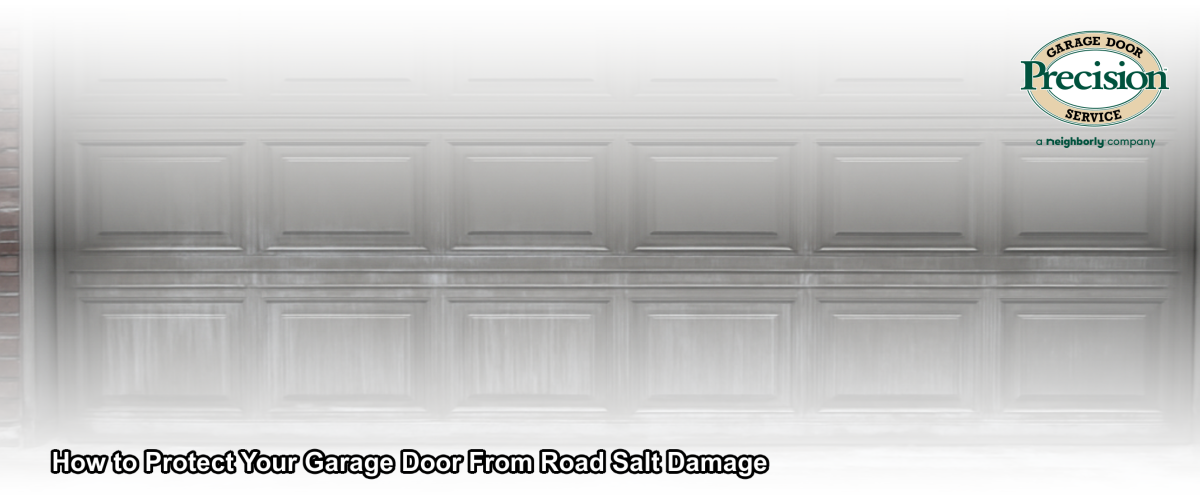
Road salt accelerates metal corrosion by pulling moisture into contact with steel surfaces and lowering the threshold at which rust forms — meaning your garage door can corrode even when temperatures are below freezing. Chicago’s Department of Streets and Sanitation applies millions of pounds of salt across city streets and expressways every winter, and that brine splashes directly onto the lower panels, bottom seal, springs, and hardware of your garage door every time a vehicle pulls in or out.
Steel garage doors, the most common type in Chicago-area homes, are especially vulnerable along the bottom two to three panels where salt spray concentrates. Left untreated, surface rust can penetrate through the galvanized coating within a single season, leading to panel failure, seized springs, and corroded track hardware that shortens the life of the entire system.
Which parts of a garage door are most at risk from salt damage?
The bottom seal, bottom panel, torsion springs, and roller hardware are the four components most frequently damaged by road salt exposure in Chicago winters.
- Bottom panel and lower sections: Direct contact with salt-laden slush makes these the first to rust and pit.
- Bottom seal (door sweep): Salt degrades rubber and vinyl seals, causing cracking and gaps that let cold air, water, and pests inside.
- Torsion springs: Springs are under constant tension and already prone to fatigue — salt-accelerated rust makes spring failure significantly more likely mid-winter.
- Rollers, hinges, and tracks: Salt residue displaces lubricant and causes metal-on-metal corrosion that creates grinding, binding, and premature wear.
How often should you rinse your garage door during Chicago winters?
Rinsing your garage door with plain water at least once every two weeks during active salting season — typically November through March in Chicago — is the single most effective low-cost habit for preventing salt buildup.
Focus the rinse on the bottom third of the door and the area directly around the tracks and rollers. Use warm water on days when the temperature is at or above 40°F so the water drains rather than refreezes. If you have access to a hose bib in a heated garage, a quick rinse after any heavy salt event is even better. For a full maintenance schedule, see our complete garage door winterization guide.
What products best protect a garage door from road salt in Chicago?
A combination of a quality automotive-grade paste wax on steel panels, a silicone-based lubricant on springs and hardware, and a reinforced rubber bottom seal gives Chicago garage doors the most complete salt defense available.
Here is what the IDA Certified Technicians at Precision Garage Door Chicago recommend for a full protective treatment:
- Paste wax or clear paint sealant: Applied to painted steel panels, this creates a hydrophobic barrier that prevents brine from bonding to the surface. Reapply at the start of each winter season.
- Silicone-based lubricant (not WD-40): Applied to torsion springs, rollers, hinges, and tracks. Silicone does not attract the grit and debris that petroleum-based sprays do, and it stays effective in sub-zero temperatures.
- Reinforced rubber bottom seal: A T-style or bulb-style seal rated for cold climates resists the cracking that standard vinyl seals develop in Chicago freeze-thaw cycles.
- Rust-inhibiting primer and touch-up paint: Any chips or scratches in the door’s finish should be touched up before winter. Bare metal exposed to road salt will rust within weeks.
What are the hidden costs of ignoring road salt damage on a garage door?
Ignoring road salt damage does not just cause cosmetic rust — it accelerates failures in structural and mechanical components that cost significantly more to replace than a seasonal protective treatment.
Here is what Chicago homeowners typically spend when salt damage goes unaddressed:
- Bottom panel replacement: $150–$400 per panel, depending on material, style, and whether the section is still in production for your door model.
- Torsion spring replacement: $150–$300 for a standard residential spring service call — a failure mid-winter often means your car is trapped until a technician arrives.
- Full door replacement: $800–$2,500+ for a standard residential steel door installed, when corrosion has progressed too far to repair individual sections.
- Bottom seal replacement: $75–$150 — a relatively low cost, but a failed seal allows water intrusion that accelerates rust on the bottom panel from the inside out.
By contrast, a full protective treatment of wax, lubricant, and seal inspection costs a fraction of any of those repairs and takes under an hour. The IDA Certified Technicians at Precision Garage Door Chicago can assess your door’s current salt exposure risk during any scheduled service visit.
Can road salt damage be repaired, or does the whole door need replacement?
Surface rust caught early can be sanded, primed, and repainted to stop further corrosion — but rust that has penetrated through the panel steel or compromised structural integrity generally requires section or full door replacement.
The practical rule of thumb: if rust is limited to the finish layer and the metal beneath is still solid, a repair is viable. If panels are pitting, flaking through, or visibly warped from moisture intrusion, replacement is the more cost-effective long-term solution. A professional inspection is the only reliable way to tell the difference. Precision Garage Door Chicago serves the broader Chicago metro area and can provide an honest assessment with no obligation to replace if repair is the right answer.
When is the best time of year to treat a Chicago garage door for salt protection?
The best time to apply protective treatments to your garage door is late October or early November, before the first significant salting events of the season — not after rust has already started forming.
A second light inspection in late January or early February, after the heaviest salt-use period, lets you catch any areas where the initial treatment has worn through. Spring is the right time for a full post-season cleaning, touch-up paint, and mechanical inspection, since accumulated salt from the entire winter is at its peak concentration on the door’s surfaces at that point. As covered in our garage door spring maintenance guide, spring is also when torsion spring stress from winter cold is most likely to show up as early failure signs.
Does a garage door warranty cover road salt damage in Illinois?
Most manufacturer warranties explicitly exclude corrosion caused by environmental exposure, including road salt, so protecting your door proactively is essential to preserving its lifespan regardless of warranty terms.
Standard residential garage door warranties cover defects in materials and workmanship — not damage caused by external chemical exposure. This is true across virtually every major door manufacturer. Homeowners in Chicago’s lakefront neighborhoods, the northwest side, and suburban communities along major salted expressways like the I-90/94 corridor should treat their doors as a routine maintenance item, the same way they would protect a vehicle’s undercarriage. Precision Garage Door Chicago’s IDA Certified Technicians can walk you through what your specific door’s manufacturer recommends for maintaining warranty-adjacent care standards even where formal coverage does not apply.
This guide was prepared by IDA Certified Technicians at Precision Garage Door Chicago, serving Chicago, IL and the surrounding metro area.
Frequently Asked Questions
How do I remove road salt from my garage door without damaging the finish?
Rinse the door with warm water and a mild car-wash soap using a soft sponge or cloth — never a stiff brush or pressure washer on painted steel, as these strip the finish. Rinse thoroughly and dry the lower panels and hardware to prevent water from sitting in crevices and accelerating rust.
How often should I lubricate garage door springs in a Chicago winter?
Lubricate torsion springs, rollers, and hinges with a silicone-based spray at least once at the start of winter and again in mid-February when salt exposure is at its peak. Avoid petroleum-based lubricants in cold climates — they thicken in low temperatures and attract grit that wears down the metal.
Will road salt rust a garage door in just one winter?
Yes — in Chicago’s high-salt environment, a steel garage door with a chipped finish, failed bottom seal, or no protective wax coating can develop visible rust on lower panels within a single winter season, especially after repeated freeze-thaw cycles that drive brine into small surface imperfections.
What is the best bottom seal for a Chicago garage door to resist salt and cold?
A T-style or bulb-style bottom seal made from reinforced EPDM rubber performs best in Chicago’s climate — it stays flexible in sub-zero temperatures and resists the cracking that standard vinyl seals develop through repeated freeze-thaw cycles. Replace it if you see cracking, gaps, or visible daylight under the closed door.
How much does it cost to protect a garage door from road salt damage in Chicago?
A DIY seasonal treatment — paste wax, silicone lubricant, and a bottom seal replacement if needed — typically runs between $30 and $100 in materials. A professional protective inspection and treatment service from Precision Garage Door Chicago costs more but includes a full mechanical assessment that can catch early salt damage before it becomes a costly repair.