

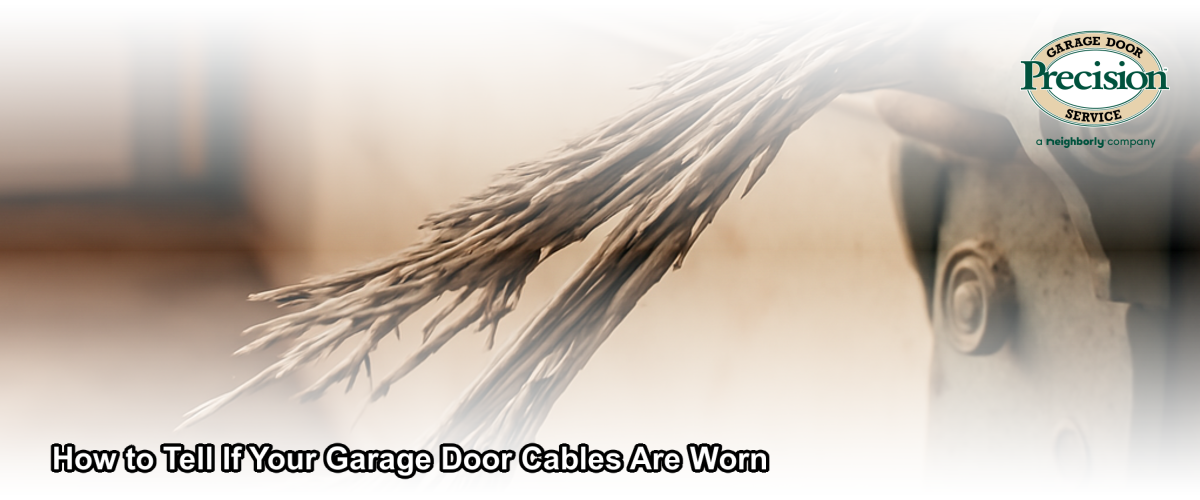
What do worn garage door cables actually look like?
Worn garage door cables typically show fraying, kinking, rusting, or unraveling strands along the cable length — any of these signs means the cable is nearing the end of its safe service life. The cables on your garage door are steel-wound and under significant tension, so visible damage is never cosmetic. If even a few individual strands are broken or splayed outward, the cable has already lost structural integrity and should be replaced before it fails completely.
At Precision Garage Door Chicago, our IDA Certified Technicians inspect cables on every service call specifically because fraying is easy to overlook during a casual visual check. The damage often hides near the drum at the top of the door or at the bottom bracket where the cable anchors — two spots most homeowners never look closely at.
How do I know if my garage door cable is about to snap?
The clearest warning signs that a garage door cable is close to snapping include one side of the door hanging lower than the other, the door jerking or stuttering as it moves, a loud bang or pop when you operate the door, or visible gaps in the cable where strands have already separated. A door that suddenly feels extremely heavy when you disengage the opener and try to lift it manually is another serious signal — it often means one cable has already failed and the other is carrying the full load.
Chicago winters compound this risk. Freeze-thaw cycles cause metal to expand and contract repeatedly, accelerating micro-fractures in cable strands that would take much longer to develop in a milder climate. If your garage faces north or sits exposed to Lake Michigan wind and road salt spray, plan on inspecting cables more frequently than the national average recommendation.
Where exactly should I look when checking garage door cables?
Inspect garage door cables at three key points: the cable drum at the top corners of the door frame, the full length of the cable running down each vertical track, and the bottom bracket where the cable loop hooks onto a pin near the bottom corner of the door panel. These anchor and transition points experience the most stress and show wear earliest.
- Cable drum area: Look for uneven winding, rust buildup, or cable slipping off the drum groove.
- Cable body: Run your eye along the full length — broken strands stick outward like small bristles and catch light differently than intact wire.
- Bottom bracket: Check the loop end of the cable for fraying where it meets the metal pin. This point takes a sharp-angle load every time the door cycles.
Important safety note: Do this visual inspection with the door fully closed and the opener unplugged. Never place your hands near the cables, springs, or drums while the door is under tension.
Can I replace garage door cables myself, or do I need a professional in Chicago?
Garage door cable replacement is a job that requires a professional in virtually all residential situations — the cables work in direct conjunction with the torsion or extension springs, which store enough energy to cause serious injury if released without the proper tools and training. Unlike lubricating hinges or replacing a weatherstrip, cable work puts you in direct contact with spring tension. IDA Certified Technicians at Precision Garage Door Chicago are specifically trained in spring-tension management and cable re-winding, and they carry the tools that make this work safe.
Chicago also has specific building conditions worth noting: many older Chicago bungalows, two-flats, and coach-house garages use non-standard door heights or heavier-gauge doors that require correctly rated cables. Using an off-the-shelf replacement cable on a door it was not rated for is a common and dangerous DIY error. If you are researching the broader spring system that works alongside your cables, see our full guide to garage door spring types for Chicago homes.
How long do garage door cables typically last?
Garage door cables typically last between 7 and 12 years under normal residential use, though this range shortens significantly with high-cycle use, harsh weather exposure, or deferred maintenance. A garage door that cycles twice per day — typical for a Chicago household — completes roughly 700 cycles per year. At that rate, cables on a standard torsion-spring system may show meaningful wear well before the 10,000-cycle life rating of economy-grade springs.
Salt air from Lake Michigan and the road salt used heavily on Chicago streets from November through March accelerates surface corrosion on cable strands. If your garage door is not well-sealed against drafts and moisture — a common issue in older Chicago garages — expect cables closer to the 7-year end of that range rather than the upper limit.
What happens if a garage door cable snaps completely?
When a garage door cable snaps, the door typically drops hard on the side where the cable failed, often bending the bottom panel, damaging the track, or causing the door to come completely off its track. In worse cases, the sudden release of tension can whip the broken cable end or cause the torsion spring to shift violently. This creates an immediate safety hazard for anyone in or near the garage, and the door becomes inoperable until professionally repaired.
A snapped cable is always an emergency repair situation. Precision Garage Door Chicago handles cable failures with priority scheduling because a garage door stuck open — or stuck at an angle — is also a security vulnerability. If your door has already dropped or is hanging unevenly right now, do not attempt to force it open or closed with the opener.
What does it cost to replace garage door cables in Chicago?
Cable replacement in the Chicago area typically involves the cost of both cables (they are almost always replaced as a pair) plus the labor to re-tension and test the full system. Because cable wear rarely happens in isolation, a professional inspection at the time of replacement will also evaluate the drums, bottom brackets, and spring tension — components that frequently show related wear. See our pricing guide for a fuller breakdown of what a cable service appointment includes.
Precision Garage Door Chicago believes in transparent, upfront pricing: our IDA Certified Technicians provide a written estimate before any work begins, so there are no surprise charges after the repair is complete. Any repair we perform is backed by our workmanship guarantee, and we stock cables rated for the full range of door weights and heights common across Chicago neighborhoods.
How often should garage door cables be inspected in Chicago?
Garage door cables in Chicago should be visually inspected by a homeowner at least twice a year — once in spring after the salt and freeze season, and once in fall before temperatures drop — and professionally inspected annually as part of a full tune-up service. Chicago’s climate puts measurably more stress on cable hardware than the national average, making annual professional inspection a practical minimum rather than an upsell.
During a professional tune-up, Precision Garage Door Chicago’s IDA Certified Technicians check cable tension balance, look for early-stage fraying invisible to the naked eye, and lubricate the drum and bracket contact points that accelerate cable wear when dry. Catching a cable at 30% wear is a minor maintenance call; waiting until it snaps becomes an emergency repair with secondary damage. Our maintenance guide covers the full annual inspection checklist if you want to understand what a complete service visit includes.
This guide was prepared by Precision Garage Door Chicago’s IDA Certified Technicians, serving Chicago, IL and the surrounding region.
Frequently Asked Questions
How can I tell if my garage door cables are worn?
Look for frayed or broken strands, visible kinking, rust discoloration, or uneven winding around the cable drum. Even a few broken strands mean the cable has lost structural integrity and should be replaced promptly.
Is it safe to use my garage door if one cable is frayed?
No. A frayed cable can snap without warning, causing the door to drop suddenly, damage tracks or panels, and create a serious safety hazard. Stop using the door and schedule a repair with an IDA Certified Technician.
How long do garage door cables last in Chicago?
Typically 7 to 12 years, but Chicago’s freeze-thaw cycles and road salt exposure can push cables toward the lower end of that range. Annual professional inspections help catch wear before a cable fails.
Can I replace garage door cables myself?
Cable replacement is not a safe DIY project because the cables are directly connected to high-tension springs that can cause serious injury if released improperly. Always hire a trained, certified technician for this repair.
What are the signs a garage door cable is about to snap?
Key warning signs include one side of the door sitting lower than the other, the door jerking during operation, a loud popping sound, or the door feeling extremely heavy when lifted manually. Any of these symptoms warrant an immediate inspection.