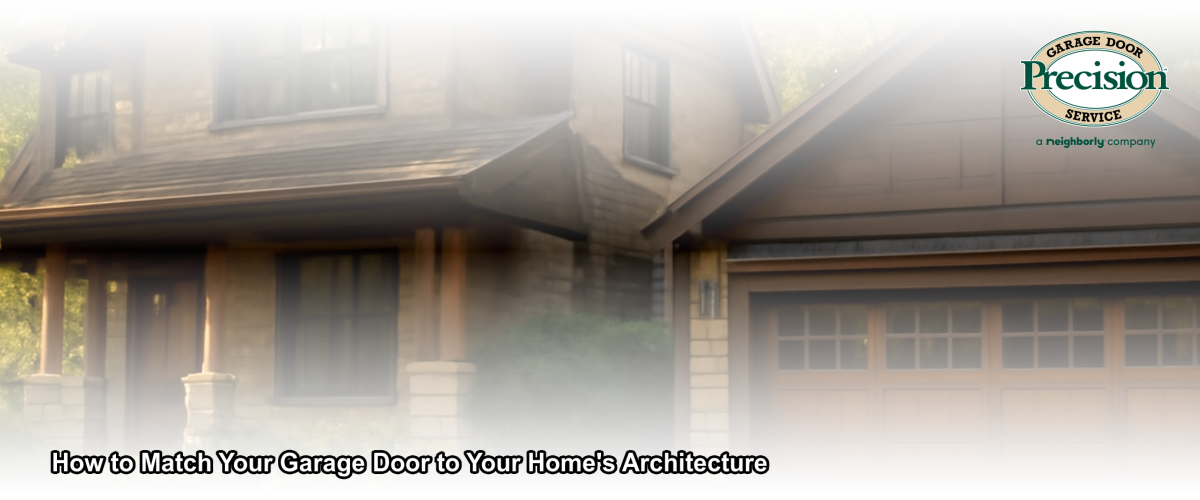
Why does your garage door matter so much for curb appeal?
Your garage door covers roughly 30–40% of your home’s front-facing exterior, making it one of the single largest visual elements a passerby or potential buyer will notice. Choose a door that clashes with your roofline, siding material, or architectural era and the entire facade can feel disjointed — even if everything else is immaculate.
In Chicago, where a single block can mix Victorian greystone two-flats, mid-century brick ranches, and modern new-construction infill, getting this match right takes more than picking a color you like. It means understanding how architectural style, material, panel layout, and hardware each contribute to a cohesive look. The IDA Certified Technicians at Precision Garage Door Chicago work through this exact process with homeowners across the city and surrounding suburbs every day.
What garage door style fits a craftsman or bungalow home?
Craftsman bungalows — one of Chicago’s most common residential styles, found heavily in neighborhoods from Beverly to Portage Park — call for a carriage house or raised-panel door with horizontal design elements that echo the home’s wide overhangs and decorative woodwork.
Look for these specific features to get the match right:
- Overlaid stile-and-rail detailing that mimics real swing-out carriage doors
- Warm wood-look finishes in cedar, walnut, or mahogany faux grain
- Wrought iron or oil-rubbed bronze hardware (handles and hinges, even if decorative)
- Windows in the top panel section — square or rectangular panes with divided light bars
Avoid flush or ultra-modern aluminum doors on craftsman homes. The clean industrial lines read as an era mismatch that no amount of paint color will fix.
What garage door style fits a Victorian, greytone, or two-flat home?
Chicago’s Victorian-era and greystone homes — especially common in Logan Square, Wicker Park, and Lincoln Square — tend to feature ornate trim, decorative brackets, and either brick or limestone facades. The right garage door here is usually a full-view or raised-panel design with strong vertical proportions, arched or cathedral window inserts, and hardware finished in black or antique brass.
Because many of these properties were built before attached garages were standard, the garage is often a detached structure at the rear or side. If yours is attached and street-facing, a carriage house door with arched window inserts can echo the rounded masonry details common on greystone facades without looking like a costume. Steel doors with a painted finish in a color drawn from the home’s trim palette — deep forest green, navy, or charcoal — tend to perform especially well here.
What garage door style fits a mid-century modern or ranch home?
Mid-century modern and ranch-style homes call for clean lines, minimal ornamentation, and horizontal emphasis — and the garage door should reinforce all three. A full-flush aluminum door, a ribbed steel door with a long horizontal panel layout, or a glass-and-aluminum full-view door all work well.
In Chicago’s inner-ring suburbs like Skokie, Oak Park, and Elmwood Park, mid-century ranches often have low-pitched rooflines and wide, single-story facades where the garage takes up a significant visual share. A door with thin horizontal grooves, no window inserts, and a matte or satin finish in warm grey, charcoal, or natural wood tone reinforces the architecture rather than fighting it. Adding decorative hardware to a mid-century home is one of the most common mismatches Precision Garage Door Chicago’s technicians are called in to correct after the fact.
What garage door style fits a newer construction or modern home?
Contemporary and new-construction homes — increasingly common in Chicago’s West Loop adjacent neighborhoods and in newer suburban developments — typically pair best with full-view aluminum and glass doors, flush steel doors, or clean recessed-panel designs with no decorative hardware.
Key material and finish choices for modern architecture:
- Aluminum frames with clear, frosted, or tinted glass panels for a light, open look
- Flush steel in dark matte finishes — charcoal, black, or deep bronze
- Composite or fiberglass doors with a smooth painted surface in monochromatic tones
- Concealed track and hardware systems that keep the exterior face clean
One important note: full-view glass doors offer minimal insulation on their own. Chicago winters regularly push temperatures well below 0°F, so if your garage is attached to the living space, ask about thermally broken frames and insulated glass options — as covered in our guide to garage door insulation and R-values.
How do you match garage door color to your home’s exterior?
The most reliable method is to pull your garage door color directly from one of three places already on the home: the front door color, the trim color, or the siding’s secondary tone. Matching to one of these anchors creates visual continuity rather than a fourth competing color on the facade.
A few Chicago-specific considerations worth noting:
- Red and orange brick — common on Chicago two-flats and bungalows — pairs naturally with warm wood tones, forest green, and deep navy, but fights with cool greys and stark whites
- Limestone and greystone facades read as warm neutral; nearly any tone works as long as you maintain consistent warmth or consistent coolness — never mix warm door hardware with a cool door finish
- Dark door colors (charcoal, black, deep green) photograph beautifully and age well in Chicago’s climate, resisting the yellowing that affects lighter painted steel after years of UV exposure and freeze-thaw cycling
When in doubt, the IDA Certified Technicians at Precision Garage Door Chicago can bring door samples and finish swatches to your home before you commit — this is always worth requesting before placing a custom order.
What role does panel layout and window placement play in architectural matching?
Panel layout — the number, size, and orientation of raised or recessed sections — is the architectural grammar of a garage door, and misreading it is as common as misreading color. Horizontal panels reinforce low-slung, wide homes; vertical or square panels suit taller, more formal facades.
Windows, when used, should align with the window proportions already on the house. If your home has tall, narrow double-hung windows, choose door window inserts with a similar vertical proportion. If you have wide casement windows or horizontal bands of glass, carry that into the door’s upper section. Placing ornate cathedral arch inserts on a flat-roofed modern home — or putting a flush window-free door on a Victorian — signals a mismatch that buyers and neighbors register even if they cannot articulate why.
What hidden costs or additional decisions should you expect when ordering a custom-matched garage door?
Matching a door precisely to your home’s architecture usually means moving beyond the base-model price point. Here is what typically adds to the final investment:
- Decorative hardware kits — handles, hinges, and clavos typically add $50–$200 depending on finish and quantity
- Custom color finishes — painted or faux-wood finish upgrades over standard colors can add $150–$500+ depending on the door size and manufacturer
- Window insert packages — decorative glass options range from $30–$80 per insert panel; full-door window packages can add $300–$600 to the order
- Insulation upgrades — stepping up to a higher R-value door for Chicago’s climate is rarely optional on an attached garage; budget $100–$300 over a non-insulated equivalent
- Custom sizing — older Chicago homes with non-standard rough openings (common in pre-war construction) may require a custom-sized door, which extends lead times and adds cost
These are not upsells for upsell’s sake — each addresses either longevity in Chicago’s climate or the architectural accuracy that makes the project worth doing in the first place. See our full guide to garage door pricing for a breakdown of what drives costs across door types and materials.
This guide was prepared by IDA Certified Technicians at Precision Garage Door Chicago, serving Chicago, IL and the surrounding Chicagoland area.
Frequently Asked Questions
What garage door style works best for a Chicago bungalow?
A carriage house style door with raised panel detailing, warm wood-look finish, and decorative wrought iron or oil-rubbed bronze hardware is the strongest match for Chicago craftsman bungalows. Avoid flush or modern aluminum doors, which clash with the bungalow’s horizontal woodwork and wide overhangs.
Should my garage door match my front door or my siding?
Matching your garage door to your front door color or your home’s trim color — rather than the siding itself — usually produces the most cohesive result. These existing anchor colors already define your home’s palette, so pulling from one of them creates visual continuity across the facade.
Can I add decorative hardware to any garage door style?
Decorative hardware like handles and hinges works well on craftsman, colonial, and traditional-style homes, but reads as an era mismatch on mid-century modern or contemporary architecture. Match your hardware choice to the home’s period and ornamentation level, not just personal preference.
Do full-view glass garage doors work in Chicago winters?
Yes, but only if you choose a version with thermally broken aluminum frames and insulated glass panels. Standard single-pane glass doors provide almost no insulation and will significantly impact an attached garage’s interior temperature during Chicago’s sub-zero winters.
How do I know if my garage door is the right fit before I order?
Ask your installer to bring physical door samples, finish swatches, and hardware options to your home before placing the order. Precision Garage Door Chicago’s IDA Certified Technicians offer this kind of on-site consultation so you can evaluate how materials and colors look against your actual siding, trim, and lighting conditions.