Why does regular garage door panel maintenance matter?
Keeping your garage door panels clean and well-maintained directly extends the lifespan of the door and prevents small cosmetic issues from turning into structural ones. Dirt, road salt, moisture, and UV exposure — all of which Chicago homeowners deal with year-round — degrade panel surfaces and seals faster than most people expect. A consistent maintenance routine costs almost nothing and can save you hundreds in premature panel replacement or repainting.
At Precision Garage Door Chicago, our IDA Certified Technicians see panel neglect as one of the most common reasons homeowners need repairs that could have been avoided. This guide walks you through exactly what to do and how often to do it.
How often should you clean garage door panels?
Garage door panels should be cleaned at least twice a year — once in the spring after winter salt and grime buildup, and once in the fall before freezing temperatures arrive. In Chicago, where road salt, freeze-thaw cycles, and lake-effect moisture are seasonal constants, panels on the street-facing side of the home take on significantly more environmental stress than in milder climates. Homes in areas with heavy traffic or near the lakefront may benefit from a third cleaning mid-summer to remove exhaust residue and UV-accelerated grime.
What supplies do you need to clean garage door panels?
You need only a few basic items to clean garage door panels safely and effectively — no specialty products required for routine maintenance.
- A bucket of warm water with a small amount of mild dish soap
- A soft-bristle brush or non-abrasive sponge
- A garden hose with a standard spray nozzle
- A dry microfiber cloth or chamois for drying
- Automotive paste wax (for steel panels) or a UV-protectant spray (for fiberglass or vinyl panels)
Never use pressure washers directly on panel seams or weatherstripping — the high-pressure stream can force water behind panels and accelerate rust or wood rot. Avoid abrasive scrubbers, bleach, or solvent-based cleaners, which can strip paint and degrade protective coatings.
How do you clean steel garage door panels step by step?
Steel panels — the most common type in Chicago-area homes — require a straightforward wash-and-protect routine to stay rust-free and retain their finish.
Step 1: Rinse the door with a garden hose to dislodge loose dirt, road salt residue, and debris from panel grooves and joints.
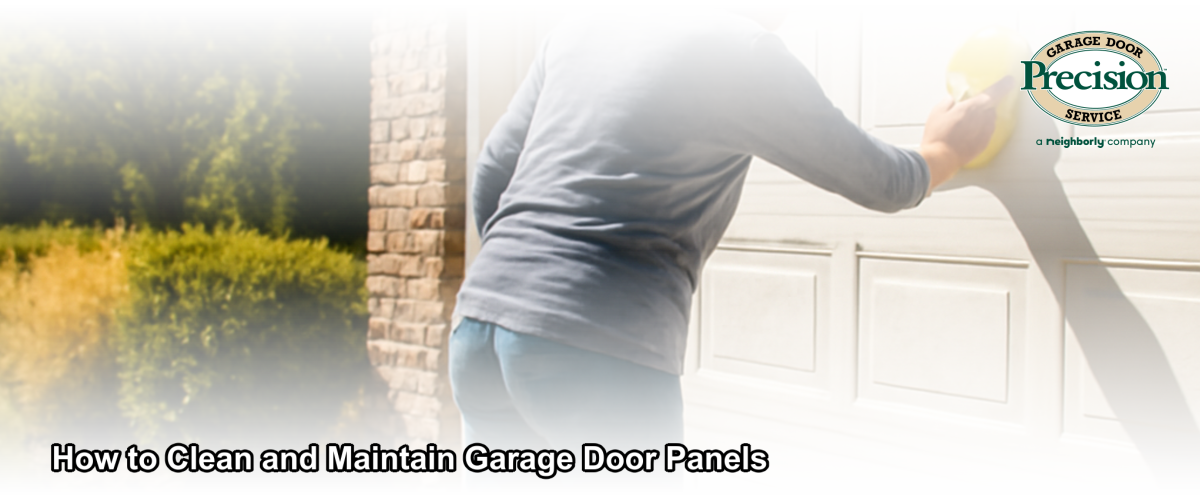
Step 2: Apply soapy water with a soft sponge using horizontal strokes, working from the top panel down to prevent dirty water from running over already-cleaned sections.
Step 3: Pay close attention to the bottom panel, which absorbs the most splash-back, salt, and moisture contact from the driveway surface.
Step 4: Rinse thoroughly, then dry with a microfiber cloth to prevent water spots and reduce the chance of surface rust forming in panel creases.
Step 5: Once dry, apply a thin coat of automotive paste wax. This creates a barrier against moisture and UV light and makes future cleaning significantly easier. Reapply wax once or twice per year.
How do you maintain wood, fiberglass, and vinyl garage door panels differently?
The cleaning process varies by panel material, and using the wrong method on the wrong surface can cause more harm than good.
Wood panels require the most attention in Chicago’s climate. After cleaning with mild soap and water, inspect all painted or stained surfaces for peeling, cracking, or moisture absorption. Wood panels should be resealed or repainted every 1 to 2 years depending on sun and moisture exposure. Any cracked or peeling finish left untreated allows water intrusion, which leads to warping and rot.
Fiberglass panels are less prone to rust but can yellow and become brittle with prolonged UV exposure. After washing, apply a UV-protectant spray or marine-grade fiberglass wax to slow oxidation. Avoid dark-colored paints on fiberglass in sun-exposed southern or western exposures.
Vinyl panels are the lowest-maintenance option. A soap-and-water wash is usually sufficient. Avoid solvent-based products entirely — they cause vinyl to crack and fade. A vinyl protectant conditioner applied annually helps maintain flexibility, which matters in Chicago’s sub-zero winters when brittle panels are more likely to crack on impact.
What should you inspect while cleaning garage door panels?
A cleaning session is also your best opportunity to catch early warning signs that panels or related components are developing problems. While washing, inspect for the following:
- Dents or creases in steel panels that may have compromised the panel’s structural integrity or insulation layer
- Rust spots at seams, hinge attachment points, or the bottom panel edge — treat immediately with a rust-inhibiting primer before repainting
- Gaps between panels when the door is closed, which indicate worn or broken hinges, not just cosmetic wear
- Cracked or compressed weatherstripping along the bottom edge and sides — replace if it no longer makes full contact with the ground or frame
- Paint bubbling or peeling on any panel surface, which signals moisture is already getting beneath the finish
If you notice gaps between panels or any hardware damage during your inspection, see our full guide to garage door panel repair and hinge replacement for next steps — or schedule a professional assessment before the issue worsens.
Can you fix minor dents in garage door panels yourself?
Minor dents in steel panels — typically less than a few inches in diameter and not affecting the panel’s structural seam — can often be reduced or removed using a DIY dent-puller kit or the compressed-air-and-hair-dryer heat-expansion method. These techniques work best on thin-gauge steel panels with shallow, smooth dents. They rarely restore the surface to a fully factory appearance but can significantly improve it without panel replacement.
Deeper dents, creases along a horizontal fold, or any damage near a hinge mounting point typically require panel replacement rather than surface repair. Attempting to straighten a structurally compromised panel can put uneven stress on the door’s track and spring system. When in doubt, an IDA Certified Technician from Precision Garage Door Chicago can assess whether a dent is cosmetic or structurally significant — often during the same visit as a tune-up.
What hidden costs or extras should you plan for with panel maintenance?
Routine cleaning itself costs nothing beyond supplies, but a thorough maintenance session often surfaces needs that do carry a price. Here is what to plan for:
- Weatherstripping replacement: Bottom seals and side seals typically cost $50–$150 in materials and are a DIY-feasible swap for most homeowners
- Touch-up paint or primer: Matching factory panel colors can be difficult on older doors; budget $20–$60 for a rattle-can touch-up that prevents rust from spreading
- Automotive paste wax or UV protectant: A quality product runs $10–$25 and is worth applying every visit
- Professional panel inspection: If you spot hinge gaps, spring tension issues, or panel warping during your cleaning, a professional inspection visit addresses all of it in one appointment
- Full panel replacement: A single damaged panel, if replacement is needed, typically runs $150–$400 per panel installed, depending on material, insulation rating, and door size — considerably less than a full door replacement if caught early
Proactive maintenance is always the lower-cost path. A door that is cleaned and waxed twice a year, with weatherstripping replaced on schedule, routinely outlasts neglected doors by 5 to 10 years.
When should you call a professional instead of handling panel maintenance yourself?
Call a professional when maintenance reveals — or causes concern about — anything beyond the panel surface itself. Springs, cables, and track systems connected to the door panels operate under significant tension and are not safe for DIY adjustment. Signs that a professional visit is the right call include: panels that visibly bow or rack when the door moves, sections that scrape the track, hinge bolts that are loose or pulling out of the panel face, or any grinding or popping noise that begins after a hard winter.
Precision Garage Door Chicago serves homeowners throughout Chicago, IL and the surrounding area with IDA Certified Technicians who handle everything from panel-level inspections to full spring and opener service. As covered in our seasonal tune-up guide, pairing a cleaning routine with an annual professional adjustment keeps every component — not just the panels — operating at spec.
This guide was prepared by Precision Garage Door Chicago’s IDA Certified Technicians, serving Chicago, IL and the greater Chicagoland area.
Frequently Asked Questions
How often should I clean my garage door panels in Chicago?
Chicago homeowners should clean garage door panels at least twice a year — once in spring to remove winter road salt and grime, and once in fall before freezing temperatures. Homes near heavy traffic or the lakefront may benefit from a third mid-summer cleaning.
What is the best cleaner to use on garage door panels?
Mild dish soap mixed with warm water is the safest and most effective cleaner for nearly all panel materials, including steel, vinyl, and fiberglass. Avoid bleach, solvent-based cleaners, and abrasive scrubbers, which can strip paint, degrade coatings, or crack vinyl in cold weather.
Can I use a pressure washer on my garage door panels?
Avoid directing a pressure washer at panel seams, joints, or weatherstripping — the high-pressure stream can force water behind panels and accelerate rust or wood rot. A garden hose with a standard spray nozzle is sufficient and much safer.
How do I prevent rust on steel garage door panels?
Wash steel panels twice a year to remove salt and moisture, dry them thoroughly after cleaning, and apply a coat of automotive paste wax once or twice a year. Treat any surface rust spots immediately with rust-inhibiting primer before they spread to panel seams or hinge points.
When should I replace a garage door panel instead of repairing it?
Panel replacement is typically the right choice when a dent affects a structural seam or fold, when damage is near a hinge mounting point, or when the panel has warped enough to create gaps when the door is closed. Single-panel replacement generally costs between $150 and $400 installed — far less than a full door, especially when caught early.