What are the most popular garage door hardware finishes?
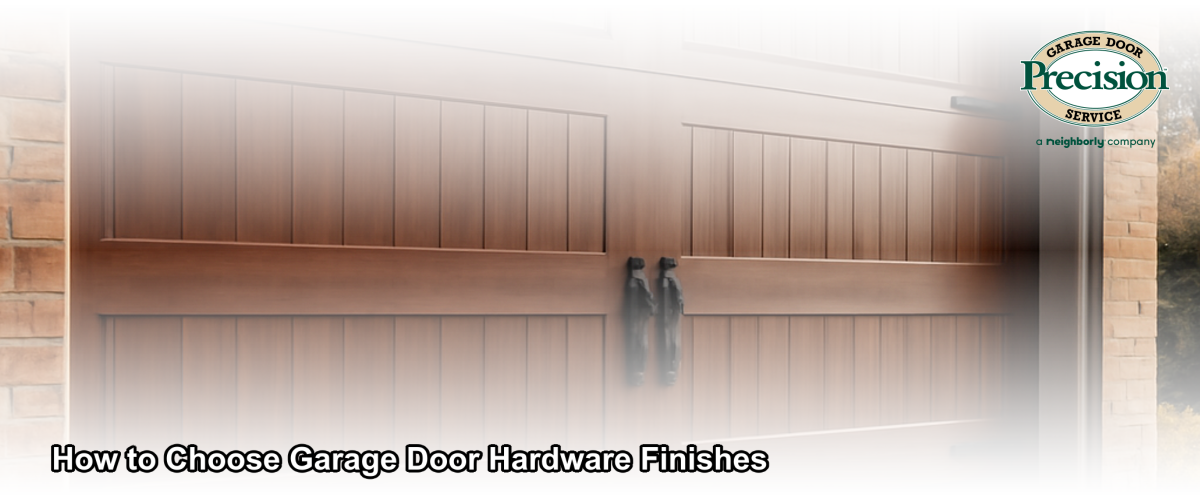
The most popular garage door hardware finishes are matte black, satin nickel, oil-rubbed bronze, and brushed chrome — each offering a distinct look that can complement traditional, craftsman, modern, or carriage-house door styles. Matte black is currently the most in-demand finish among Chicago homeowners for its versatility and ability to contrast cleanly against both light and dark door panels. Oil-rubbed bronze and antique brass finishes are top choices for homes in neighborhoods with classic brick architecture.
At Precision Garage Door Chicago, our IDA Certified Technicians work with a full range of decorative hardware options so you can coordinate your door’s look with your home’s existing fixtures and facade.
How do I match hardware finishes to my garage door style?
Match your garage door hardware finish to the architectural style of the door and the dominant metal tones already present on your home’s exterior — door handles, light fixtures, and house numbers are the best reference points. Carriage-house and craftsman doors pair naturally with oil-rubbed bronze, matte black, or antique brass. Contemporary and flush-panel doors look sharpest with brushed chrome, satin nickel, or flat black. Traditional raised-panel doors are the most flexible and can carry almost any finish cleanly.
- Matte black: Modern, craftsman, and farmhouse styles
- Oil-rubbed bronze: Carriage-house, colonial, and craftsman styles
- Satin nickel / brushed chrome: Contemporary and transitional styles
- Antique brass / gold: Traditional and French country styles
A common rule of thumb from our IDA Certified Technicians: choose a hardware finish that repeats at least one other metal tone already on your front door or porch — this creates a cohesive exterior palette without requiring an expensive full-property update.
Which garage door hardware finishes hold up best to Chicago winters?
In Chicago’s climate, powder-coated finishes — especially powder-coated matte black and powder-coated bronze — outperform plated or polished options because the coating bonds directly to the metal substrate and resists the freeze-thaw cycles, road salt spray, and moisture that accelerate corrosion on Lake Michigan-adjacent properties. Chicago experiences average winter lows well below freezing, and the city’s proximity to the lake drives above-average humidity and salt-laden air, both of which are harsh on bare or thinly plated metals.
Polished chrome and bright nickel finishes look stunning but require more frequent cleaning and touch-ups in Chicago’s winters. If you prefer a polished look, ask about stainless steel hardware options, which offer similar aesthetics with substantially better corrosion resistance than standard chrome plating. See our broader guide to garage door maintenance in winter for how finish care fits into your seasonal upkeep routine.
What is the difference between decorative and functional garage door hardware?
Decorative garage door hardware — including surface-mount handles, faux hinges, and strap accents — is applied purely for aesthetics and does not bear any structural load. Functional hardware includes the actual operating components: real hinges, rollers, tracks, springs, and cables that physically move and support the door. Both categories are available in coordinating finishes, but they serve entirely different purposes and should never be confused when planning an upgrade.
Many homeowners upgrade to decorative hardware to achieve a carriage-house appearance on a standard sectional door without the cost of a full door replacement. Precision Garage Door Chicago carries decorative hardware kits designed to mount directly onto existing panels, and our IDA Certified Technicians can install them as a standalone service separate from any mechanical work.
How much does garage door hardware finish upgrades cost in Chicago?
Decorative hardware kits for a standard two-car garage door in Chicago typically range from $80 to $350 for materials, depending on finish quality, the number of pieces in the set, and whether the hardware is cast iron, steel, or zinc alloy. Professional installation labor adds roughly $75 to $150 for a straightforward decorative kit on a panel door with no mechanical complications. Full functional hardware replacements — rollers, hinges, end brackets — run $150 to $400 or more depending on door size and hardware grade.
Powder-coated and stainless finishes typically cost 10–25% more than standard painted or plated equivalents, but that premium is almost always worthwhile in Chicago’s climate given the longevity difference. As covered in our guide to garage door replacement costs, hardware is one of the lowest-cost ways to meaningfully refresh your door’s appearance without a full panel swap.
What hidden costs should I expect when upgrading garage door hardware finishes?
Beyond the hardware pieces themselves, budget for a few commonly overlooked items. First, mismatched screw or bolt heads are a frequent oversight — if your new hardware is matte black, standard silver fasteners will stand out and undercut the finished look; finishing screws in a matching color are a small but real added cost. Second, older door panels sometimes need surface prep or touch-up paint where previous hardware was mounted, especially if the original finish has faded unevenly around the old hardware footprint.
Third, if you are combining a decorative hardware upgrade with any functional hardware replacement — new rollers, new hinges — labor costs can overlap and save you money when bundled into a single service call rather than scheduled separately. Ask your technician upfront about bundling to avoid paying a second trip charge. Our IDA Certified Technicians at Precision Garage Door Chicago will walk through all applicable costs before any work begins.
Should I choose matching or mixed-metal hardware finishes for my garage door?
Matching all hardware to a single finish is the safest and most cohesive approach, especially for symmetrical carriage-house designs where the visual rhythm of repeated hardware elements is the whole point. However, a deliberately mixed-metal look — such as matte black hardware on a door with brushed nickel exterior light fixtures — can work well on modern and transitional homes, provided the finishes share a similar undertone (warm with warm, cool with cool) rather than clashing across the warm-cool divide.
The most common mistake is mixing finishes accidentally rather than intentionally — for example, replacing one damaged handle in a different finish from the original set. If you need to replace individual pieces, bring a photo of your existing hardware or the model number to ensure a consistent match. Precision Garage Door Chicago stocks a wide range of replacement pieces specifically to help homeowners avoid mismatched patchwork repairs.
When is the best time of year to upgrade garage door hardware in Chicago?
Late spring through early fall — roughly May through September — is the optimal window for garage door hardware upgrades in Chicago. Temperatures in the 55°F–85°F range allow adhesives, caulks, and touch-up coatings to cure properly, and dry conditions reduce the risk of moisture getting into newly drilled mounting points before sealant sets. Winter installs are entirely possible and done routinely, but extreme cold can make panel surfaces more brittle and slow curing times for any sealants used around mounting hardware.
That said, if your existing hardware is damaged — a broken handle, a corroded hinge — there is no reason to wait for seasonal timing. Our IDA Certified Technicians at Precision Garage Door Chicago, serving Chicago and the surrounding Illinois communities, are available for service calls year-round.
This guide was prepared by Precision Garage Door Chicago’s IDA Certified Technicians, serving Chicago, IL and the surrounding region.
Frequently Asked Questions
What garage door hardware finish is best for Chicago weather?
Powder-coated finishes — particularly matte black and powder-coated bronze — hold up best in Chicago’s climate because the coating resists freeze-thaw cycles, road salt, and lake-driven humidity better than plated or polished alternatives. Stainless steel is the best option if you prefer a polished look with similar durability.
How do I know which hardware finish matches my garage door style?
Use your home’s existing exterior metal tones — porch lights, door handles, house numbers — as your guide. Matte black and oil-rubbed bronze suit craftsman and carriage-house doors; satin nickel and brushed chrome work best on contemporary styles; antique brass fits traditional and colonial designs.
How much does it cost to add decorative hardware to a garage door in Chicago?
Decorative hardware kits typically cost $80 to $350 for materials, with professional installation adding $75 to $150 for a standard two-car door. Powder-coated and stainless finishes cost roughly 10–25% more than standard options but last significantly longer in Chicago’s climate.
Is decorative garage door hardware the same as functional hardware?
No. Decorative hardware — handles, faux hinges, and strap accents — is surface-mounted for appearance only and carries no structural load. Functional hardware includes real hinges, rollers, springs, and cables that physically operate the door. Both are available in matching finishes but serve completely different purposes.
Can I install garage door hardware finishes myself or do I need a professional?
Decorative hardware kits are generally DIY-friendly for handy homeowners since they mount to the door panel surface with screws. However, if the upgrade involves any functional hardware — real hinges, rollers, or brackets — professional installation by an IDA Certified Technician is strongly recommended to ensure the door operates safely and correctly.