

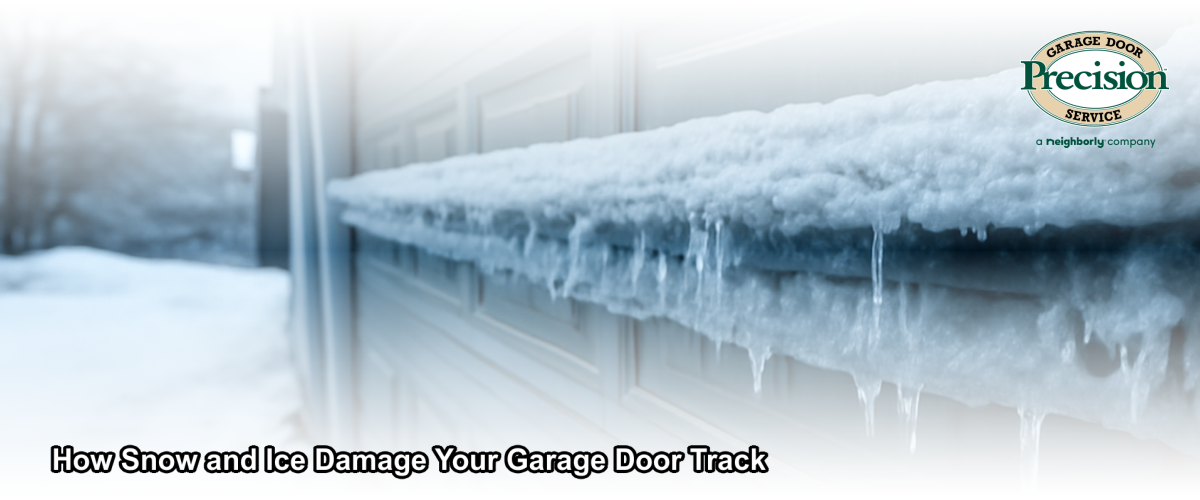
How does snow and ice buildup damage a garage door track?
Snow and ice that accumulates on or near your garage door track can warp the metal, force rollers out of alignment, and bend the brackets that hold the track in place — all without any single dramatic event. In Chicago, where freeze-thaw cycles happen repeatedly throughout winter, the damage compounds over weeks rather than appearing all at once.
Water from melting snow seeps into the small gap between the roller and the track wall. When temperatures drop overnight — as they routinely do along the lakefront and through the South and Northwest Side neighborhoods — that water refreezes, expanding and pushing the roller off its correct path. Even a track misalignment of a few millimeters can cause the door to bind, skip, or stop mid-travel.
What are the warning signs that ice has affected my garage door track?
The clearest warning signs that ice or snow has damaged your garage door track include a door that hesitates or jerks during opening, a visible gap between the roller and the track wall, grinding or scraping sounds during operation, and a door that stops before reaching fully open or closed.
You may also notice the bottom corners of the door lifting slightly off the ground even when closed — a sign the track has been pushed out of plumb. If the door reverses direction on its own during closing, the opener’s safety sensors may be detecting the resistance caused by a misaligned or partially frozen track rather than an actual obstruction. Do not ignore these signals; continued operation against a damaged track accelerates wear on rollers, cables, and the opener motor itself.
Why is Chicago’s winter climate especially hard on garage door tracks?
Chicago’s climate is particularly damaging to garage door hardware because the city routinely cycles between sub-zero temperatures and above-freezing thaws within the same week — sometimes within the same day. This pattern is more destructive to metal tracks than a consistently cold climate, because repeated expansion and contraction stresses the steel and loosens mounting hardware over time.
Ground-level garages throughout the Chicago metro area are also vulnerable to blowing snow drifting directly against the door threshold. Once that snow is packed against the bottom seal and the base of the track, the morning freeze locks it solidly to the floor and the door frame. Forcing the door open against that ice bond is one of the most common causes of a bent bottom bracket that Precision Garage Door Chicago technicians see on service calls each January and February.
Can I remove ice from the track myself, or do I need a professional?
You can safely remove surface ice from a garage door track yourself using a plastic scraper and a calcium chloride-based deicer — but you should never use a heat gun, open flame, or metal scraper directly on the track, as these can warp the metal or strip the protective coating that prevents corrosion.
After clearing visible ice, check that the track is still plumb by holding a level against it. If the track has shifted, or if rollers feel stiff after the ice is gone, the hardware needs a professional inspection before you resume normal use. Lubrication alone will not correct a bent track or a roller that has been forced out of alignment. As covered in our guide to garage door roller replacement, worn or cracked rollers that have been stressed by ice should be replaced rather than simply re-lubricated.
What does it cost to repair a garage door track damaged by snow or ice in Chicago?
Track repair costs in Chicago typically range from $125 to $300 for a single bent or misaligned section, depending on whether the track can be realigned in place or must be replaced. A full track replacement on one side — including the curved section and vertical rail — generally runs $175 to $400 per side when completed by a professional technician.
Bracket replacement, which is often needed alongside track work when ice has forced the bottom bracket loose from the wall, adds $40 to $90 per bracket. If the opener motor was strained repeatedly trying to move a frozen door, a motor or drive assessment may be recommended at the same visit — a diagnostic typically runs $50 to $85 and is credited toward any repair performed. See our full guide to garage door repair costs in Chicago for a complete breakdown of common service line items.
What hidden costs should I expect with a winter track repair?
When ice damage brings a technician to your door, the track itself is rarely the only component that needs attention. Here is what to expect beyond the basic track realignment or replacement fee:
- Roller replacement: Nylon rollers cracked by cold-weather stress typically add $75 to $150 for a full set of 10–12 rollers.
- Cable inspection and replacement: A door forced against a frozen threshold can snap or fray lift cables. Cable replacement runs $95 to $175 per cable.
- Bottom seal replacement: The rubber seal at the door base is the first line of defense against drifting snow. If it has torn or hardened, replacement costs $50 to $100.
- Hinge hardware: Hinges stressed by a misaligned track may be bent or cracked; a full hinge set replacement adds $60 to $120.
A thorough technician will identify these issues during the same visit rather than requiring a second call, which is the more cost-effective outcome for the homeowner. Precision Garage Door Chicago’s IDA Certified Technicians perform a full safety inspection on every service visit, so secondary damage is not missed.
How can I prevent snow and ice from damaging my garage door track this winter?
The most effective prevention steps are clearing snow from the door threshold before each freeze, applying a silicone-based lubricant to the tracks and rollers at the start of the season, and inspecting the bottom seal annually before November to confirm it still makes full contact with the floor.
Applying a thin coat of lubricant specifically rated for low-temperature use — not WD-40, which attracts debris and loses viscosity in cold conditions — to the full length of both tracks before the first hard freeze significantly reduces the chance that rollers will seize. Chicago homeowners with an attached garage benefit from keeping the garage temperature above freezing when possible; even a 35°F interior slows the ice bond that forms at the door base overnight. Our winterization checklist covers the full seasonal preparation sequence if you want a step-by-step reference.
When should I call Precision Garage Door Chicago instead of waiting?
Call Precision Garage Door Chicago immediately if the door will not open or close at all, if the track is visibly bent or separated from the wall bracket, or if you hear a loud pop or snap when the opener engages — these are indicators of a snapped cable or a roller that has jumped the track entirely, both of which are unsafe to operate.
Precision Garage Door Chicago serves the full Chicago metro area including neighborhoods throughout the North Side, South Side, and surrounding suburbs, with IDA Certified Technicians available for same-day and emergency service appointments. Attempting to run a door with a detached roller or bent track risks dropping the door off its tracks entirely, which can damage the door panels beyond repair and create a safety hazard. When in doubt, disconnect the opener and leave the door in place until a technician can assess it.
This guide was prepared by Precision Garage Door Chicago’s IDA Certified Technicians serving Chicago, IL and the surrounding metro area.
Frequently Asked Questions
Can ice in the garage door track cause the door to stop working completely?
Yes. Ice expanding inside the track can force a roller off its path or lock the door to the floor, preventing the opener from moving the door at all. A door that reverses or stops mid-travel in winter is often responding to track resistance caused by ice, not an opener malfunction.
How much does it cost to fix a garage door track bent by ice in Chicago?
Track realignment in Chicago typically costs $125 to $300. Full single-side track replacement runs $175 to $400, and bent bottom brackets add $40 to $90 each. Expect additional costs if rollers, cables, or the bottom seal were also damaged.
What should I use to melt ice from my garage door track without damaging it?
Use a calcium chloride deicer and a plastic scraper. Avoid heat guns, open flames, and metal scrapers, which can warp the track or strip its protective coating. After deicing, check that the track is still plumb and lubricate rollers with a silicone-based low-temperature lubricant.
How do I stop my garage door from freezing to the ground in winter?
Replace worn bottom seals before November, clear snow from the threshold before overnight freezes, and keep garage temperatures above freezing when possible. A silicone lubricant applied to the seal and track before the first hard freeze also reduces the chance of an ice bond forming.
Are Precision Garage Door Chicago technicians certified to handle winter track repairs?
Yes. Precision Garage Door Chicago employs IDA Certified Technicians who perform a full safety inspection on every service visit, including assessment of track alignment, roller condition, cables, and brackets — all components commonly stressed by Chicago winter conditions.