

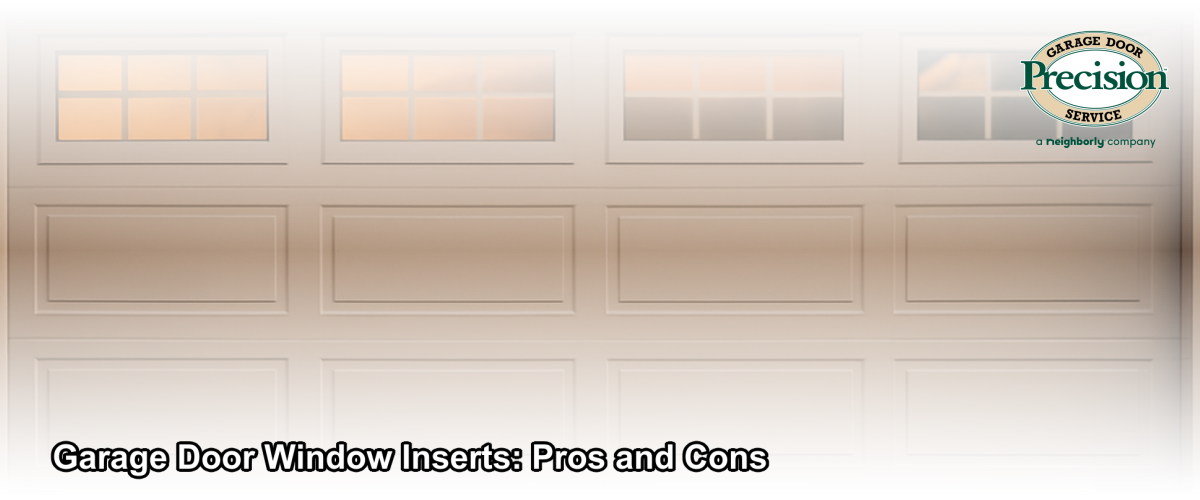
What are garage door window inserts, and how do they work?
Garage door window inserts are framed glass or acrylic panels that fit into pre-cut or factory-routed sections of a garage door, allowing natural light into the garage while maintaining the door’s structural integrity. They are available in a wide range of styles — from simple clear rectangles to decorative frosted, tinted, or beveled designs — and can typically be installed on most steel, wood, or composite garage doors that have compatible panel sections.
Most inserts snap or screw into the door panel from the inside, which means they can often be retrofitted onto an existing door without a full replacement. Precision Garage Door Chicago installs and services window inserts across the Chicago metro area, and our IDA Certified Technicians assess panel compatibility before any work begins to make sure the insert style you choose is structurally sound for your specific door.
What are the main benefits of adding window inserts to a garage door?
The biggest benefit of garage door window inserts is natural light — a single row of inserts can dramatically reduce the need for artificial lighting in an attached or detached garage, which is especially valuable during Chicago’s shorter winter days when daylight hours are limited.
- Improved curb appeal: Window inserts add architectural detail and visual symmetry that can increase a home’s perceived value and street presence.
- Natural daylighting: Reduces reliance on overhead lighting, potentially cutting electricity use in a frequently used garage.
- Design flexibility: Available in dozens of styles — clear, frosted, tinted, wrought-iron decorative overlays — to match nearly any home exterior.
- Retrofittable: Many inserts can be added to an existing door without full replacement, making them a cost-effective upgrade.
- Ventilation options: Some insert styles include operable panels that allow limited airflow.
What are the downsides of garage door window inserts?
The most significant drawback of garage door window inserts is reduced thermal performance — any glass or acrylic panel, even double-pane insulated glass, conducts heat and cold more readily than a solid insulated door panel, and in Chicago’s climate that trade-off is worth taking seriously.
Chicago winters regularly push temperatures well below freezing, and summers bring high humidity and heat. If your garage is conditioned, used as a workshop, or shares a wall with living space, adding standard single-pane inserts can noticeably increase heating and cooling costs. Beyond thermal concerns, inserts also introduce privacy and security considerations: clear glass at eye level makes the interior of your garage visible from the street, and the glass panels themselves represent a potential point of forced entry if not properly reinforced.
- Thermal loss: Even insulated glass inserts reduce a door’s overall R-value compared to a fully solid panel.
- Privacy: Clear or lightly frosted inserts may expose valuables or vehicles inside the garage.
- Security: Glass panels can be broken; laminated or impact-resistant glass adds cost but improves this significantly.
- Maintenance: Inserts collect dirt, moisture, and in Chicago winters, ice along the frame seals — they require periodic cleaning and seal inspection.
- Weight: Adding inserts increases door panel weight, which can affect spring tension balance. Our IDA Certified Technicians always check and adjust spring balance after insert installation.
How much do garage door window inserts cost in Chicago?
Garage door window inserts typically range from $30 to $75 per insert for standard acrylic or single-pane glass panels, while decorative inserts with wrought-iron overlays, frosted glass, or double-pane insulated glass generally run $80 to $200 per insert or more depending on size and style.
For a standard two-car garage door with a single row of four inserts, material costs alone typically land between $120 and $800. Professional installation by Precision Garage Door Chicago adds labor — and because our technicians recalibrate spring tension after any weight change to the door, you are getting a complete, balanced installation, not just a panel swap. As covered in our full garage door pricing guide, the total cost of any upgrade depends on your existing door’s panel configuration and condition.
What hidden costs should I expect with window insert installation?
Beyond the insert panels themselves, the realistic cost picture includes spring tension adjustment (required any time door weight changes), any panel routing or cutting fees if your door sections are not pre-slotted, and potential seal or weatherstripping replacement around each insert frame to maintain a weather-tight fit — especially important given Chicago’s freeze-thaw cycles.
If you opt for insulated double-pane inserts to preserve your door’s R-value, expect to pay a premium of roughly $50 to $100 more per insert compared to single-pane equivalents. That cost is often worthwhile for attached garages or conditioned spaces in the Chicago metro, where heating season runs from October through April.
Do window inserts hurt garage door insulation — and does that matter in Chicago?
Yes, window inserts reduce a garage door’s effective R-value, and in Chicago that matters more than in most U.S. cities. Chicago’s climate zone (ASHRAE Zone 5) means exterior temperatures can swing from well below 0°F in January to above 90°F in July, and an uninsulated or under-insulated garage door is one of the largest thermal weak points in a home’s envelope.
A fully insulated steel garage door without windows typically achieves an R-value between R-6 and R-18 depending on the door. Adding standard single-pane inserts drops the effective panel R-value to near R-1 at the insert locations. Double-pane insulated glass inserts partially offset this, achieving roughly R-2 to R-3 at the glass, but still represent a thermal step down from solid insulated steel. If energy efficiency is your top priority, our technicians can walk you through insert options that minimize thermal impact — see our related guide on garage door insulation for a full breakdown of R-value by door type.
Are garage door window inserts a DIY project or should I hire a professional in Chicago?
Simple snap-in acrylic inserts on a door that already has pre-routed panel slots are genuinely manageable as a DIY project for a handy homeowner — the process typically involves popping out a decorative trim ring, fitting the insert, and snapping the retaining frame back in place. However, any installation that changes the total weight of the door — which includes adding glass inserts to a door that previously had none — requires a spring tension recalibration that is not a DIY task.
Torsion and extension springs are under extreme tension and are one of the leading causes of serious garage door injury when adjusted without proper training and equipment. Precision Garage Door Chicago’s IDA Certified Technicians handle the full scope: insert fitting, panel integrity check, spring recalibration, and a final door balance test. For Chicago homeowners with older doors or non-standard panel configurations, a professional assessment before purchasing inserts is also the best way to avoid buying panels that don’t fit.
What window insert styles work best with Chicago homes?
Chicago’s residential architecture spans everything from Lincoln Park greystones and Bucktown two-flats to mid-century ranch homes in the northwest suburbs, and the right insert style depends heavily on matching the home’s exterior character. For traditional brick or stone facades, rectangular inserts with wrought-iron decorative overlays or arched tops tend to complement the architecture naturally. For newer construction or contemporary homes, frameless or minimalist rectangular clear-glass inserts maintain a clean, modern aesthetic.
Frosted or obscured glass inserts are a strong choice for any home where the garage faces a public street or alley — they deliver natural light while blocking the view of vehicle and storage contents. Tinted inserts offer a middle ground: reduced glare and partial privacy without the fully opaque look of frosted glass. Precision Garage Door Chicago stocks and sources a wide range of insert styles and can bring samples for review during a consultation.
How do I maintain garage door window inserts through Chicago’s winters?
Chicago’s freeze-thaw cycle is hard on any exterior frame seal, and garage door window inserts are no exception. The most important maintenance task is inspecting the rubber or vinyl gasket around each insert frame before winter sets in — typically in October — and replacing any cracked or compressed seals before temperatures drop.
Ice can form in the gap between a poorly sealed insert frame and the door panel, which causes the frame to flex and can crack acrylic inserts over time. Cleaning insert frames with a mild non-abrasive cleaner twice a year (spring and fall) prevents grit buildup that accelerates seal wear. If you notice fogging between panes on a double-pane insulated insert, the seal has failed and the insert should be replaced — fogged glass has lost most of its insulating value. As covered in our seasonal maintenance checklist, a fall tune-up is the right time to inspect inserts alongside springs, rollers, and weatherstripping.
This guide was prepared by Precision Garage Door Chicago’s IDA Certified Technicians, serving Chicago, IL and the surrounding metro area.
Frequently Asked Questions
Do garage door window inserts reduce insulation in cold climates like Chicago?
Yes. Any glass or acrylic insert lowers the effective R-value of the door panel where it is installed. In Chicago’s climate, double-pane insulated glass inserts are recommended over single-pane to minimize heat loss, but even insulated inserts perform below a solid panel. The impact is most significant for attached garages or conditioned spaces.
Can I add window inserts to my existing garage door without replacing it?
In most cases, yes — many garage doors have pre-routed panel slots designed to accept standard insert frames. If your door panels are not pre-slotted, a professional can assess whether routing is possible. Any time inserts are added, a spring tension recalibration is required because the added glass weight changes the door’s balance.
How much do garage door window inserts cost?
Standard acrylic or single-pane inserts typically cost $30 to $75 per panel. Decorative or double-pane insulated glass inserts run $80 to $200 or more per panel. A single row of four inserts on a two-car door runs roughly $120 to $800 in materials before installation and spring adjustment labor.
Are garage door windows a security risk?
Standard glass inserts can be broken, which is a legitimate security consideration. Laminated or impact-resistant glass inserts significantly reduce this risk. Frosted or high-placement inserts also limit visibility into the garage, making it harder for opportunistic thieves to assess what is inside.
What style of garage door window inserts works best for Chicago homes?
It depends on your home’s architecture. Traditional brick or stone exteriors pair well with arched or wrought-iron overlay inserts. Contemporary homes suit frameless rectangular clear-glass inserts. Frosted glass is a smart choice for any door facing a public street or alley, providing natural light without sacrificing privacy.