

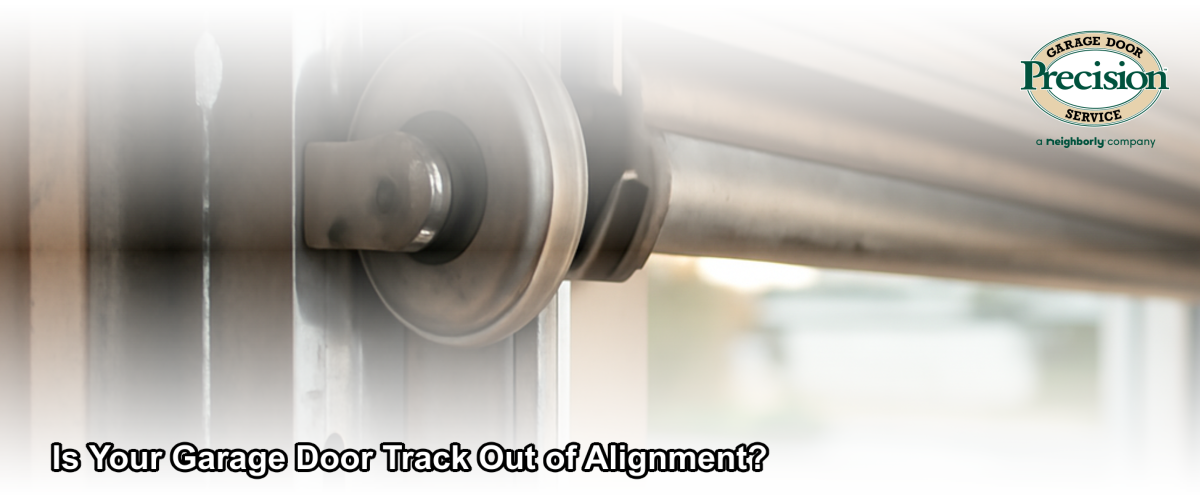
What are the signs that a garage door track is out of alignment?
The clearest signs of a misaligned garage door track include the door moving unevenly or jerking as it opens or closes, a visible gap between the rollers and the rail, loud squealing or grinding noises during operation, and the door stopping before it fully opens or closes. Any one of these symptoms is a reason to stop using the door and have it inspected — continuing to operate a door with a bent or shifted track puts added stress on the springs, cables, and opener motor.
Precision Garage Door Chicago, staffed by IDA Certified Technicians, sees misalignment as one of the most common service calls across the Chicago area. The problem often starts small — a minor bend or a loose mounting bracket — and escalates quickly if ignored.
Why do garage door tracks go out of alignment in Chicago?
Chicago’s climate is one of the leading contributors to garage door track problems, because repeated freeze-thaw cycles cause the metal hardware and the concrete or wood framing it is anchored to expand and contract at different rates, gradually loosening mounting bolts and shifting bracket positions over time.
Beyond weather, common causes include:
- Impact from a vehicle bumping the door or frame
- Worn or broken rollers that create uneven lateral force on the rail
- Loose or missing lag bolts in the wall-mounted track brackets
- A cable that has snapped or slipped off the drum, yanking the bottom of the door sideways
- Age-related metal fatigue, especially on tracks more than 10–15 years old
Garages on Chicago’s North Shore and in older bungalow-style homes throughout neighborhoods like Logan Square and Bridgeport can be especially susceptible, because the original track hardware in those structures was often installed decades ago without modern vibration-dampening brackets.
Is a gap between the door roller and the track always a serious problem?
Yes — any visible gap between a roller and the track rail is a sign the door is partially off its intended path and should be treated as a safety issue, not a cosmetic one. A garage door can weigh anywhere from 100 to over 400 pounds depending on the material and size, and a door that jumps completely off its track can fall rapidly, causing property damage or serious injury.
A gap of even 1/4 inch between the roller and the inside of the rail indicates the track has shifted, the bracket has loosened, or the rail itself is bent. Do not attempt to force the door back into alignment manually while the spring system is under tension — that work should always be performed by a trained technician.
What noises does a misaligned garage door track make?
A misaligned track typically produces a grinding or scraping sound as the roller drags against the edge of the bent or shifted rail, and you may also hear a popping or snapping sound at the point where the track angle changes from vertical to horizontal — the curve section that redirects the door onto the ceiling-mounted horizontal rails.
A rhythmic squealing that happens at the same point in every open or close cycle often points to a single deformed section of track rather than a system-wide problem. A louder, more unpredictable rattling suggests that one or more mounting brackets have come loose, allowing the entire rail to vibrate against the wall. Both scenarios warrant a professional inspection. As covered in our guide to garage door maintenance, catching hardware noise early is almost always less costly than waiting until a component fails completely.
Can you realign a garage door track yourself?
Minor bracket tightening — re-seating a loose lag bolt on a wall-mounted bracket — is a task a capable homeowner can handle safely, but any adjustment that involves bending or repositioning the track itself should be left to an IDA Certified Technician, because the track must be precisely plumb and level or the door will bind, wear out its rollers prematurely, and strain the opener.
More importantly, garage door tracks work in conjunction with a high-tension spring system. Torsion springs above the door and extension springs along the horizontal rails are under extreme stored energy. Working near them without proper training and tools carries a real risk of injury. Precision Garage Door Chicago strongly advises against DIY track realignment beyond basic bolt tightening — the cost of a professional adjustment is far lower than the cost of a spring-related injury or a door replacement caused by improper realignment.
What does it cost to fix a misaligned garage door track in Chicago?
The cost to repair a misaligned garage door track in Chicago typically depends on whether the track can be adjusted and re-secured or must be replaced entirely. Track realignment — repositioning and tightening existing hardware — is generally the least expensive repair; full track replacement on one side costs more and varies based on door height and track gauge.
What affects the final price:
- Severity of the bend or shift — a minor bracket adjustment versus a section of track that must be replaced
- Track gauge — heavier doors require heavier-gauge steel track, which costs more
- Associated damage — rollers, cables, or springs that were stressed by the misalignment may need to be replaced at the same visit
- Door height — standard 7-foot doors versus taller 8- or 9-foot doors use different track lengths and hardware
When you schedule a service call with Precision Garage Door Chicago, a technician will inspect the full track system — not just the obvious point of misalignment — before quoting the repair, so you are not surprised by secondary issues found mid-job.
What hidden damage can a misaligned track cause if left unrepaired?
Leaving a misaligned track unrepaired puts every other component in the system under abnormal stress: rollers wear out faster because they are dragging against an edge instead of rolling cleanly inside the rail, cables fray because the door is no longer lifting straight, and the opener motor overworks to compensate for the added resistance — shortening its lifespan significantly.
In Chicago winters, water and ice can enter the gap created by a shifted track bracket and freeze, further distorting the hardware overnight. A door that jams in the open position in January is not just an inconvenience — it is a security and heat-loss emergency. Addressing track alignment in the fall, before temperatures drop, is one of the most practical preventive steps Chicago homeowners can take. See our full seasonal maintenance checklist for the complete pre-winter inspection routine.
How often should garage door tracks be inspected in Chicago?
Garage door tracks in Chicago should be visually inspected at least twice a year — ideally once in the spring after the freeze-thaw season and once in the fall before temperatures drop below freezing — with a full professional tune-up recommended annually to catch bracket loosening, roller wear, and track deflection before they develop into alignment failures.
During a professional tune-up, an IDA Certified Technician from Precision Garage Door Chicago checks track plumb and level with calibrated tools, re-torques all mounting hardware, clears debris from the track channel, and lubricates the rollers and hinges — work that takes less than an hour and can extend the service life of the entire door system by years.
This guide was prepared by IDA Certified Technicians at Precision Garage Door Chicago, serving Chicago, IL and the surrounding region.
Frequently Asked Questions
How do I know if my garage door track is out of alignment?
Key warning signs include the door jerking or moving unevenly, a visible gap between the rollers and the rail, grinding or scraping noises during operation, and the door stopping before it fully opens or closes. If you notice any of these, stop using the door and schedule a professional inspection.
Is it safe to use my garage door if the track looks bent?
No. A bent or shifted track means the door is partially off its intended path. Because garage doors can weigh 100 to over 400 pounds, continuing to operate a door with a damaged track risks the door falling off the track entirely, which can cause serious injury or property damage.
Can I realign my garage door track myself?
Basic tasks like tightening a loose bracket bolt are manageable for a homeowner, but repositioning or bending the track itself should always be handled by a certified technician. The track must be precisely plumb and level to function safely, and the work is done near high-tension springs that are dangerous without proper training and tools.
Why does Chicago weather cause so many track alignment problems?
Chicago’s repeated freeze-thaw cycles cause metal hardware and surrounding wood or concrete to expand and contract at different rates, gradually loosening the bolts and brackets that hold tracks in position. This is why fall inspections before the first freeze are especially valuable for Chicago homeowners.
What else can go wrong if I ignore a misaligned garage door track?
An uncorrected misalignment causes rollers to wear prematurely, cables to fray from uneven lifting, and the opener motor to overwork — all of which shorten the lifespan of those components and can lead to a complete door failure. Catching and fixing the track early is almost always less expensive than replacing the parts that fail as a result.