
What are garage door safety sensors and how do they work?
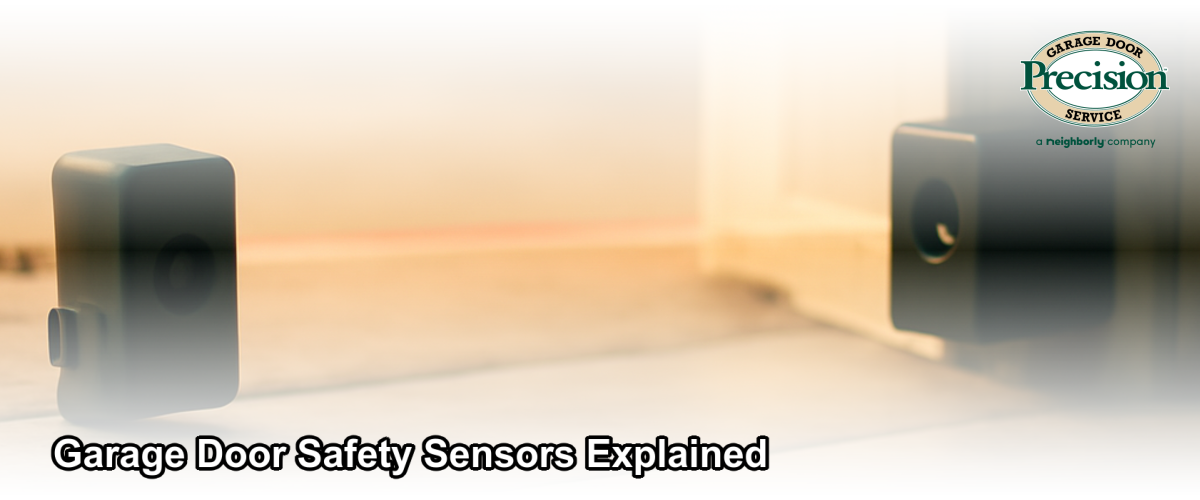
Garage door safety sensors are a pair of small photoelectric devices mounted near the bottom of your garage door tracks — one on each side — that project an invisible infrared beam across the door opening. When anything breaks that beam while the door is closing, the system immediately reverses the door to prevent it from striking a person, pet, or object. This automatic reversal mechanism has been federally required on all residential garage door openers sold in the United States since 1993.
One sensor unit is the sender (typically indicated by a steady amber or yellow light), and the opposite unit is the receiver (typically indicated by a steady green light). The receiver detects the beam continuously. The moment the beam is interrupted — or misaligned — the opener interprets it as an obstruction and responds accordingly. At Precision Garage Door Chicago, our IDA Certified Technicians inspect both units as part of every service call because a sensor problem that looks minor can create a serious safety hazard.
Why are garage door safety sensors required by law?
The 1993 federal mandate from the U.S. Consumer Product Safety Commission (CPSC) made photoelectric safety sensors — along with an auto-reverse force test — mandatory on all new residential garage door openers, following decades of injuries and fatalities caused by doors closing on people and vehicles. Before this requirement existed, a closing garage door had no automatic way to detect an obstruction in its path.
In Chicago, IL, where families rely on attached garages year-round given the region’s harsh winters, a properly functioning sensor system is not just a code item — it is a daily safety checkpoint. If your opener predates 1993 and lacks photoelectric sensors, it should be replaced entirely, not patched. Our maintenance guide covers opener age and upgrade thresholds in more detail.
What do the sensor lights mean when they are blinking or the wrong color?
A blinking or mismatched sensor light is almost always the first visible sign that your safety sensors are not working correctly, and the door will typically refuse to close fully or will reverse immediately after you press the button. Here is what each indicator pattern generally means:
- Amber light off or blinking: The sender unit has lost power, is damaged, or the wiring connection is loose.
- Green light off or blinking: The receiver is not detecting the beam — the sensors are misaligned, obstructed, or the receiver unit is faulty.
- Both lights solid but door still reverses: An obstruction is physically blocking the beam path, or the sensors are dirty and the beam is being diffused rather than cleanly received.
- Lights solid but opener blinks its LED a set number of times: Many openers use a blink-count diagnostic code; consult your opener manual or call Precision Garage Door Chicago for a diagnostic read.
Never defeat or bypass a sensor to force the door to close. Doing so eliminates the only active safety barrier between the door and anyone in its path.
What causes garage door sensors to stop working?
The most common causes of sensor failure in Chicago-area homes fall into a predictable set of categories, many of them related directly to the region’s climate and seasonal conditions.
- Misalignment: Sensors get nudged out of position by bumping a trash can, a car door, or snow and ice buildup on the track bracket. Even a fraction of an inch of misalignment can break the beam.
- Dirty or frosted lenses: Chicago winters produce condensation and frost that can coat sensor lenses and scatter the infrared beam. A soft cloth wipe often resolves this.
- Direct sunlight interference: During certain times of year, low-angle morning or afternoon sun shining directly into the receiver lens can overwhelm it. Repositioning the sensor bracket by a few degrees is usually the fix.
- Damaged wiring: Vibration from a high-cycle door, rodent activity, or corrosion on terminal connections — all more common in older Chicago garages — can interrupt sensor power.
- Defective sensor unit: Sensor units themselves can fail electronically, especially if they are more than 10 years old or have been exposed to repeated moisture intrusion.
How do you realign or troubleshoot garage door sensors yourself?
Homeowners can safely attempt basic sensor troubleshooting before calling a professional — the sensors themselves carry no high-voltage risk, unlike springs and cables. Start with these steps in order:
- Clear any physical obstruction from the sensor path — boxes, leaves, ice, or a pet toy resting on the floor in the beam’s line.
- Wipe both sensor lenses gently with a clean, dry microfiber cloth to remove dust, grease, or frost.
- Loosen the wing nut or mounting bracket screw on the receiver (green light) sensor and slowly pivot it until the green light becomes steady and solid, then re-tighten.
- Check that both sensor wires are firmly seated in their terminals on the sensor bodies and back at the opener motor head.
- Test the door by pressing the close button and placing a cardboard box (at least 1.5 inches tall) in the door’s path — the door should reverse cleanly on contact.
If the sensors remain unresponsive after these steps, the unit may need replacement. As covered in our full garage door opener guide, sensor replacement is typically a straightforward repair for an IDA Certified Technician and should not require a full opener swap.
How much does it cost to replace garage door safety sensors in Chicago?
Sensor replacement in the Chicago, IL area is one of the more affordable garage door repairs — but the total cost depends on whether the issue is the sensor unit itself, the wiring, or the mounting hardware.
- Sensor unit replacement (pair): Typically ranges from $85 to $150 for parts and labor when performed by a certified technician.
- Wiring repair or replacement: If wiring from the sensor to the motor head is damaged or corroded, add roughly $50 to $100 depending on run length and access.
- Diagnostic service call: Most professional garage door companies charge a service call fee to diagnose sensor issues before any repair work begins — confirming the actual fault saves you from replacing parts unnecessarily.
At Precision Garage Door Chicago, our IDA Certified Technicians arrive stocked with common replacement sensor components so the repair can typically be completed in a single visit. We do not recommend purchasing off-brand universal sensors online and self-installing them on openers with proprietary wiring — compatibility issues can cause the sensor to appear functional while the safety reversal remains unreliable.
What hidden costs should I expect with a sensor repair?
Beyond the sensor unit itself, a thorough technician will check the full safety system while on-site — including the mechanical auto-reverse force setting, which works independently of the photoelectric sensor. If the opener’s force is set too high, the door may not reverse even when the sensor fails to trigger. Correcting this adds no parts cost, only a few minutes of adjustment time. If an opener is older than 15 to 20 years and the sensor failure is part of a broader pattern of malfunctions, a technician may recommend full opener replacement — an honest assessment that protects you from recurring service visits on aging equipment.
How often should garage door safety sensors be tested and maintained?
The International Door Association recommends testing the photoelectric sensor system at least once a month — a process that takes under two minutes. Place a solid object (a two-by-four lying flat works well) in the door’s path, press close, and confirm the door reverses before making contact. If it does not reverse, stop using the door and call Precision Garage Door Chicago for service.
In Chicago, IL, we also recommend a lens cleaning at the start of each season — particularly in late fall before frost arrives and again in spring after road salt and grime accumulate. Annual professional tune-up visits give a technician the opportunity to check sensor alignment, wiring integrity, and opener force settings together, catching problems before they become safety events. See our full seasonal maintenance checklist for a complete inspection framework.
This guide was prepared by Precision Garage Door Chicago’s IDA Certified Technicians, serving Chicago, IL and the surrounding area.
Frequently Asked Questions
Why does my garage door go back up right after I close it?
When a garage door reverses immediately after you press close, it almost always means the safety sensors are misaligned, obstructed, or have dirty lenses preventing the infrared beam from reaching the receiver. Check for physical obstructions first, then wipe both sensor lenses and try realigning the receiver unit until its indicator light glows solid green.
Can I bypass my garage door sensors to make the door close?
You can temporarily close most openers by holding the wall button continuously, which overrides the sensor — but you should never permanently disable or block the sensors. Doing so removes the only active protection against the door striking a person, child, or pet. Fix or replace the sensors before resuming normal use.
How long do garage door safety sensors last?
Most garage door safety sensors last between 10 and 15 years under normal conditions, though Chicago’s freeze-thaw cycles and garage humidity can shorten that lifespan. If your sensors are more than a decade old and are giving repeated trouble, replacement is more cost-effective than repeated repairs.
Do both garage door sensor lights need to be on for the door to work?
Yes — both the amber sender light and the green receiver light must be steady and solid for the system to function correctly. A blinking or off light on either unit means the beam circuit is broken and the opener will refuse to close the door automatically as a safety precaution.
Are garage door safety sensors universal or brand-specific?
Many sensors are brand-specific, particularly for newer openers with proprietary safety protocols. Using an incompatible universal sensor can make the door appear to function while the reversal system remains unreliable. An IDA Certified Technician can confirm the correct replacement unit for your specific opener model.