

Garage Door Maintenance Inspection Tips for Chicago Homes
By Precision Garage Door Services Editorial Team · Updated 2026-08-20
Chicago garage door inspections should be performed regularly, ideally twice a year, to cover tracks, springs, cables, and weatherstripping before harsh Midwest winters set in. Precision Garage Door Services recommends checking for rust, frayed cables, and worn rollers, since these cause the majority of emergency calls. Technicians answer calls 24/7 and diagnose issues that homeowners often miss during routine checks.
Key Takeaways
Perform garage door maintenance twice yearly to extend lifespan and prevent expensive repairs.
Address damaged or broken components immediately to avoid escalating problems and safety hazards.
Implement standardized safety routines to pass Chicago inspections and maintain productive garage bays.
Precision Garage Door Services provides professional maintenance for Chicago-area properties.
Perform garage door maintenance twice yearly to extend lifespan and prevent expensive repairs.
Address damaged or broken components immediately to avoid escalating problems and safety hazards.
Implement standardized safety routines to pass Chicago inspections and maintain productive garage bays.
Precision Garage Door Services provides professional maintenance for Chicago-area properties.
What Do You Need Before Inspecting Your Garage Door?
Three basic items handle most inspection needs: a rag, white lithium grease lubricant, and a ladder for reaching upper hardware. Chicago garage doors face daily wear and tear from harsh Midwest weather, constant use, and airborne debris, so gathering the right supplies before starting matters more here than in milder climates. Skipping this prep step often turns a five-minute check into a longer, messier job.
Garage door maintenance inspection tips work best as part of a quick, twice-a-year routine. This schedule extends the door’s lifespan and helps Chicago homeowners avoid expensive repairs before winter ice and summer humidity take their toll.
What Tools Should Homeowners Gather First?
Set out a clean rag, a can of white lithium grease, and a sturdy ladder before touching any hardware. These three items cover cleaning, lubricating, and reaching rollers, hinges, and tracks safely.
Do These Materials Handle Every Chicago Garage Door?
Most sectional doors respond well to this basic kit, regardless of season. Homeowners uncertain about deeper issues, spring tension, or opener problems should skip DIY fixes. Precision Garage Door Services answers calls with real people around the clock. Schedules appointments throughout the Chicago area for anything beyond routine upkeep.
How Do You Complete a Chicago Garage Door Inspection?
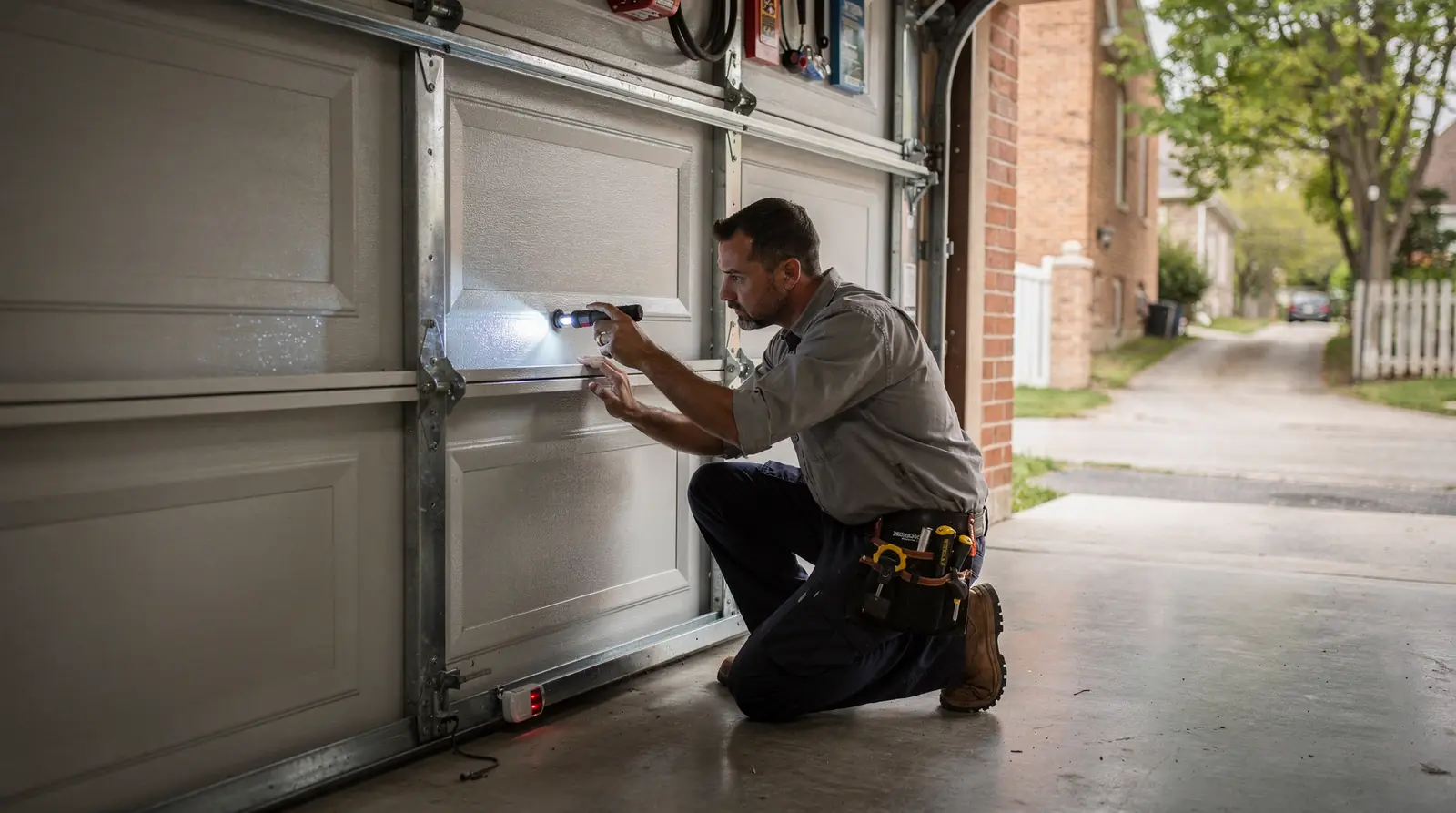
A proper Chicago garage door inspection starts with a full visual sweep of the door. Its hardware before any lubrication or operational testing begins. Chicago homeowners who follow structured garage door maintenance inspection tips catch small issues before winter turns them into costly breakdowns. The process works best as a repeatable routine, not a one-time glance.
Before starting, clear the garage floor and close the door fully so every panel, track, and cable stays visible from top to bottom.
Inspect the door surface, panels, and visible hardware for rust, cracks, or loose bolts.
Listen closely while the door opens and closes; scraping sounds or jerky movement signal a developing problem long before total failure.
Check the photo-eye safety sensors mounted near the bottom of each track, confirming correct height, clean lenses, solid LED indicators, and intact wiring.
Test the door’s balance and reversal response only after the visual and audio checks confirm no damaged components.
Note any damaged or broken part discovered along the way and schedule repair rather than letting it sit through a Chicago winter.
Inspect the door surface, panels, and visible hardware for rust, cracks, or loose bolts.
Listen closely while the door opens and closes; scraping sounds or jerky movement signal a developing problem long before total failure.
Check the photo-eye safety sensors mounted near the bottom of each track, confirming correct height, clean lenses, solid LED indicators, and intact wiring.
Test the door’s balance and reversal response only after the visual and audio checks confirm no damaged components.
Note any damaged or broken part discovered along the way and schedule repair rather than letting it sit through a Chicago winter.
Why Does Listening to the Door Matter?
Sound often reveals trouble before a visual check does. A grinding noise or uneven motion during operation points toward worn rollers, a failing opener gear, or a spring under strain.
What Happens If a Damaged Part Gets Ignored?
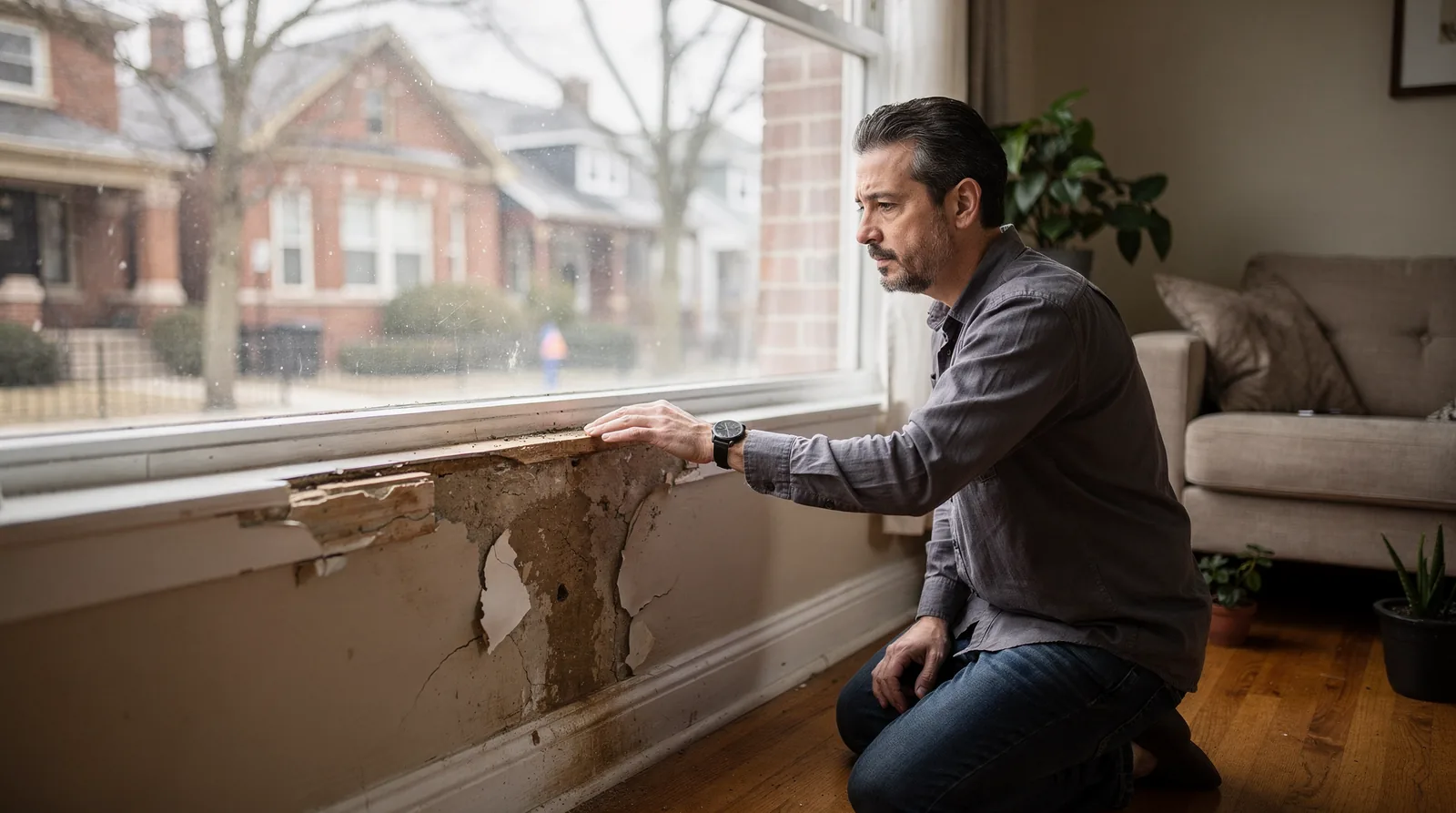
Neglected components rarely stay small. A cracked panel or frayed cable left untreated tends to worsen, especially under the freeze-thaw cycles common to Chicago winters, leading to steeper repair bills later.
Completing each step keeps the door operating smoothly and helps Chicago households avoid emergency repair costs during the coldest months.
What Mistakes Should Chicago Homeowners Avoid?
Two mistakes cause most emergency garage door calls across Chicago: ignoring small damage and treating the door as an afterthought. Neglected components rarely stay small. A frayed cable or worn roller left untreated turns into a jammed or fallen door, often at the worst possible moment. Chicago’s freeze-thaw cycles accelerate that decline fast.
The bigger error is forgetting what the door actually protects. A garage door guards home security, holds in energy efficiency during brutal winters, and shapes curb appeal on every block from Logan Square to Beverly. Skipping garage door maintenance inspection tips overlooks all three at once.
Is a DIY fix ever risky enough to skip?
Attempting spring or opener repair without training risks injury and further damage. Precision Garage Door Services trains IDA Certified Technicians and backs work with an industry-standard warranty. Homeowners avoid guesswork on high-tension parts.
Common missteps include:
Ignoring squeaks or slow response times
Delaying repairs after storm damage
Skipping seasonal inspections before winter
Ignoring squeaks or slow response times
Delaying repairs after storm damage
Skipping seasonal inspections before winter
For issues beyond basic checks, Precision Garage Door Services serves Chicago and surrounding areas, ready to inspect and repair.
FAQ
How often should Chicago homeowners inspect their garage doors?
Chicago garage door inspections should be performed regularly, ideally twice a year, to cover tracks, springs, cables, and weatherstripping before harsh Midwest winters set in. This routine extends the door’s lifespan and helps homeowners avoid expensive repairs.
What tools do homeowners need before inspecting a garage door?
Homeowners need a clean rag, a can of white lithium grease, and a sturdy ladder before touching any hardware. ### What should homeowners check during a garage door inspection?
Homeowners inspect the door surface, panels, and hardware for rust, cracks, or loose bolts, listen for scraping or jerky movement, and check the photo-eye safety sensors for correct height, clean lenses, and intact wiring.
Facts
Precision Garage Door Services provides garage door maintenance and repair for Chicago-area homeowners.
Precision Garage Door Services provides garage door maintenance and repair for Chicago-area homeowners.
Conclusion
In closing, regular garage door maintenance inspections protect your investment and ensure reliable operation year-round. By addressing wear on cables, springs, and hardware before failure occurs, you avoid costly emergency repairs and extend your door’s lifespan. Precision Garage Door Services stands ready to help Chicago-area homeowners maintain their systems with professional inspections. Quality repairs that prioritize durability and safety.