What is the difference between a garage door keypad and a remote?
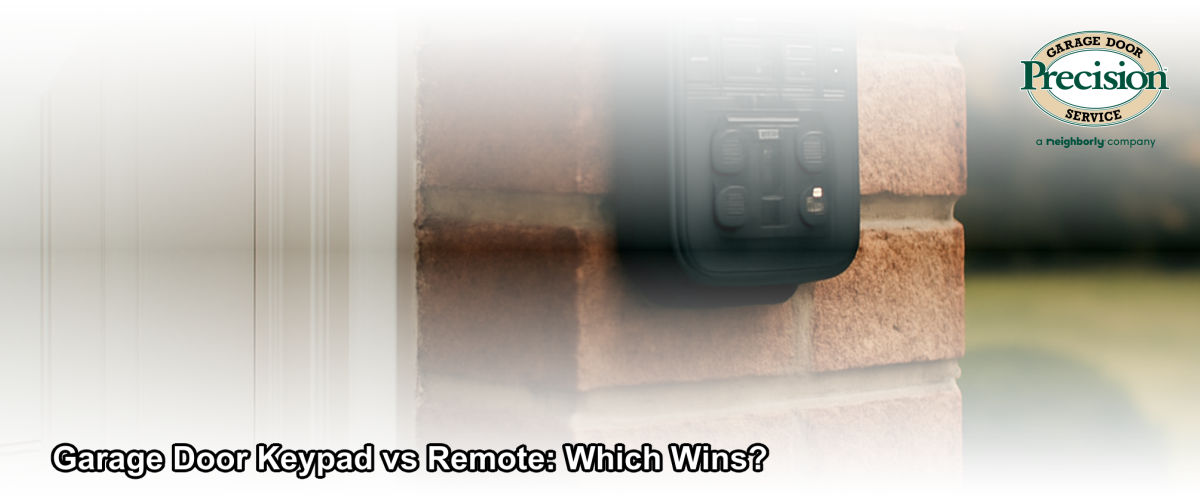
A garage door keypad is a PIN-based entry device mounted outside your garage that lets you open and close the door without carrying anything, while a garage door remote is a handheld transmitter you keep in your car or pocket. Both connect wirelessly to your garage door opener, but they solve slightly different problems — and for many Chicago homeowners, using both together is the most practical setup.
Understanding which device fits your daily routine comes down to four factors: how you typically access your garage, who else needs access, how you feel about carrying a small device, and how each option holds up in Chicago’s extreme seasonal weather.
Is a garage door keypad more convenient than a remote for everyday use?
A keypad is generally more convenient if you regularly arrive on foot — jogging, biking, or walking from the CTA — because there is nothing to carry, lose, or leave inside the car. You simply punch in your PIN and the door opens. For families with children who come home before parents, a keypad is also significantly easier to manage than handing out remotes that can be misplaced or damaged.
Remotes win on pure in-car speed. A single button press from your visor or sun-visor clip starts the door before you even pull into the driveway, which matters on bitter Chicago January mornings when you want to minimize any time spent in the cold. If the majority of your comings and goings are by car, the remote is marginally faster and more frictionless in that specific context.
How does Chicago weather affect keypad and remote performance?
Chicago’s temperature swings — from well below zero in winter to humid heat in summer — affect both devices, but in different ways. Keypads are mounted outdoors and must withstand freeze-thaw cycles, ice buildup, and moisture. Most modern keypads sold and installed by Precision Garage Door Chicago are rated for outdoor use and sealed against moisture, but buttons can stiffen in extreme cold and battery life shortens significantly below freezing.
Remotes stay inside a warm car most of the time, which protects the battery and electronics from temperature extremes. However, radio-frequency interference — more common in dense urban environments like the Chicago metro — can occasionally reduce remote range or cause missed signals. If you have experienced range issues with a remote, our technicians can evaluate whether the antenna or frequency pairing needs adjustment. (See our related guide on garage door opener troubleshooting for more on signal interference.)
Which option is more secure — a keypad or a remote?
Modern keypads and remotes from leading opener brands both use rolling-code technology, which generates a new encrypted code with every use so that a code cannot simply be copied and replayed by a bad actor. Neither device is inherently less secure than the other at the hardware level, assuming both use current rolling-code or Security+ 2.0 protocols.
The practical security difference comes down to human behavior. A keypad PIN can be shared selectively — with a dog walker, a contractor, or a teenager — without handing over a physical device. You can also change the PIN at any time without buying new hardware. A remote, on the other hand, is a physical object that can be stolen from a car, lost, or cloned if it is an older, fixed-code model. If your home currently has a fixed-code remote (common on openers manufactured before the mid-1990s), Precision Garage Door Chicago’s IDA Certified Technicians strongly recommend upgrading to a rolling-code system regardless of whether you choose a keypad, remote, or both.
How much does a garage door keypad cost compared to a remote?
A professionally installed wireless keypad typically runs $50 to $120 for the unit itself, plus installation labor, depending on brand compatibility and your existing opener model. A replacement or additional remote generally costs $30 to $80 per unit, with multi-button remotes and universal models at the higher end. If you are adding both at the same time during a service visit, bundling them together is usually more cost-effective than scheduling separate appointments.
Keep in mind that some opener upgrades — particularly smart-enabled systems — include a keypad or app-based access as part of the package, which can reduce or eliminate the add-on cost. Ask an IDA Certified Technician from Precision Garage Door Chicago whether your current opener supports a direct-brand keypad or requires a universal unit, since direct-brand keypads tend to integrate more reliably and hold up longer.
What hidden costs or extras should I know about before choosing?
Battery replacement is the most overlooked ongoing cost for both devices. A keypad uses standard AA or 9V batteries and, mounted outdoors in Chicago winters, may need replacement once or twice a year rather than the every-two-years pace you might expect in a milder climate. Remotes last longer on batteries because they spend most of their time in a climate-controlled car.
If your opener is older and does not support a modern keypad’s frequency or rolling-code protocol, you may need a receiver upgrade or a full opener replacement to make the keypad compatible — a cost that can range from $150 to $500+ depending on the unit. Our technicians assess compatibility during every service visit so there are no surprises after the hardware is ordered. Also consider that a spare remote for a second vehicle is a recurring cost many households underestimate; a single keypad, by contrast, serves the whole household indefinitely without duplicating hardware.
Can I use a garage door keypad and remote at the same time?
Yes — and for most Chicago households, running both in parallel is the most practical solution. The remote handles the daily car-based commute with one-touch convenience, while the keypad covers on-foot arrivals, guest access, and situations where the remote is forgotten or left inside. Most garage door openers support multiple remotes and a keypad simultaneously with no additional programming complexity.
Smart garage door openers take this a step further by adding smartphone-based control as a third access layer, which can include real-time open/close alerts, scheduled access windows for guests, and remote monitoring from anywhere — useful for Chicago homeowners who travel frequently or manage rental properties. If you are weighing a smart opener upgrade alongside a keypad or remote addition, see our full guide to smart garage door openers for a side-by-side breakdown.
Should I repair or replace my current remote or keypad, or upgrade the whole opener?
If your current remote or keypad has simply worn out or been lost, a direct replacement is almost always the right call — it is faster and far less expensive than replacing the opener. However, if the opener itself is 10 or more years old, experiencing frequent malfunctions, or using outdated fixed-code technology, the smarter investment is often a new opener that comes with modern access hardware included.
Precision Garage Door Chicago’s IDA Certified Technicians evaluate your full system — opener, springs, sensors, and access devices — on every visit, so you get an honest assessment of whether a $50 keypad swap or a larger upgrade makes more financial sense for your situation. We serve homeowners across the Chicago metro and are committed to recommending only what your specific setup actually needs.
This guide was prepared by Precision Garage Door Chicago’s IDA Certified Technicians, serving Chicago, IL and the surrounding metro area.
Frequently Asked Questions
Is a garage door keypad or remote better for a Chicago home?
For most Chicago households, using both is ideal — a remote for fast in-car access on cold winter mornings, and a keypad for on-foot arrivals and shared family access. If you had to choose one, a keypad offers more flexibility since it requires nothing to carry and can be shared via PIN without handing out hardware.
How long do garage door keypads last in cold Chicago winters?
A quality outdoor-rated keypad typically lasts 5 to 10 years, but Chicago’s freeze-thaw cycles can stiffen buttons and drain batteries faster than average — expect to replace batteries once or twice a year rather than every two years in milder climates.
Can someone hack my garage door keypad or remote?
Modern keypads and remotes use rolling-code encryption, which generates a new access code after every use, making replay attacks essentially ineffective. The real security risk is older fixed-code remotes, common on openers made before the mid-1990s, which should be upgraded regardless of which access device you prefer.
How much does it cost to add a keypad to an existing garage door opener in Chicago?
A wireless keypad addition typically costs $50 to $120 for the unit plus professional installation labor. Compatibility with your existing opener affects the price — direct-brand keypads are generally more reliable and may cost slightly more than universal units.
Do I need to replace my garage door opener to add a keypad?
Not always — most openers manufactured in the last 15 to 20 years support a compatible wireless keypad. Older openers using fixed-code or proprietary frequencies may require a receiver upgrade or full opener replacement before a modern keypad will pair correctly; a technician can confirm compatibility before any hardware is ordered.