

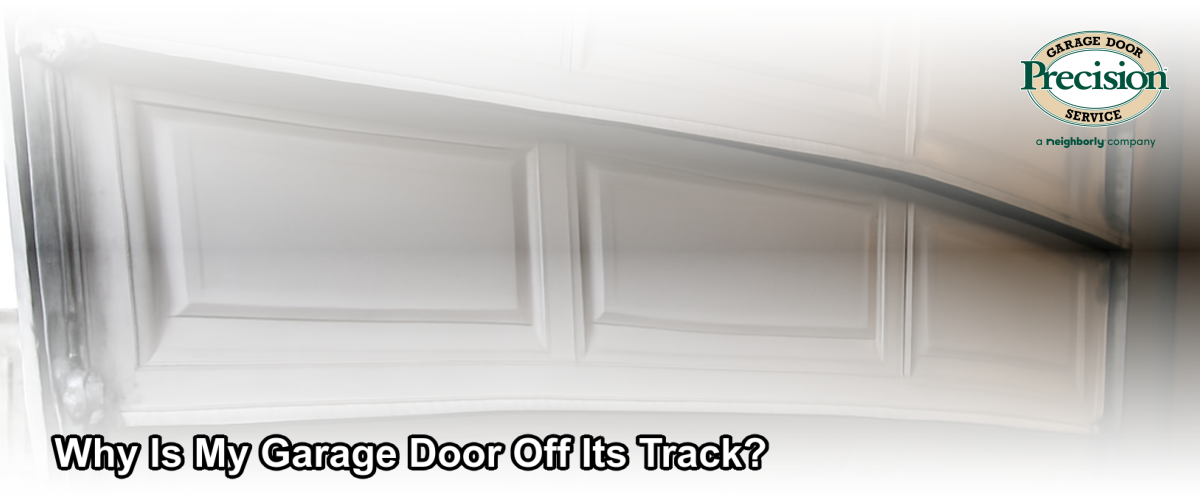
What does it mean when a garage door is off its track?
A garage door that is off its track has partially or fully separated from the metal rails that guide it up and down — meaning the rollers have slipped out of the track channel, causing the door to hang unevenly, grind, or refuse to move entirely. This is one of the most common service calls Precision Garage Door Chicago receives from homeowners across the city and surrounding suburbs.
An off-track door is not just an inconvenience — it is a safety hazard. A door that is misaligned can fall suddenly, damage your vehicle, or injure someone nearby. If your door has jumped its track, stop operating it immediately and call an IDA Certified Technician before attempting any repair yourself.
What causes a garage door to come off its track?
The most common cause of a garage door coming off its track is a physical impact — typically a vehicle bumping into the door or a panel — but several other mechanical and environmental factors are just as likely to be the root cause.
The most frequent causes our IDA Certified Technicians at Precision Garage Door Chicago diagnose include:
- Vehicle impact — Backing into the door or clipping a panel forces rollers out of the track channel instantly.
- Worn or broken rollers — When a roller cracks or the stem bends, it can no longer stay seated in the track and the door jumps the rail.
- Bent or misaligned track — Even a slight dent or a track that has shifted out of plumb will eventually cause the rollers to derail under the door’s weight.
- Loose track hardware — The lag bolts and brackets holding your track to the wall can loosen over time, allowing the track to flex away from the correct path.
- Broken cables — If one lift cable snaps, the door drops unevenly on that side and the sudden shift in weight can pull rollers off the opposite track.
- Extreme temperature swings — Chicago winters are hard on garage door components. Metal tracks contract in the cold, which can tighten clearances enough to bind rollers and eventually push them off the rail.
How do Chicago winters make a garage door more likely to jump its track?
Chicago’s freeze-thaw cycles put unique stress on garage door hardware that homeowners in milder climates never experience. When temperatures drop well below freezing — which happens repeatedly from November through March in the Chicago area — steel tracks contract and the lubricant in roller bearings thickens, increasing friction and the chance of a derailment.
Ice buildup at the bottom of the door is another cold-weather culprit. If the door freezes to the ground and the opener tries to lift it anyway, the sudden force can snap a cable or yank rollers straight out of the track. Our technicians see a measurable spike in off-track calls after the first hard freeze each season, and again after significant snowfall events. As covered in our seasonal maintenance guide, lubricating tracks and rollers with a low-temperature silicone spray before winter is one of the most effective ways to prevent this.
Can a bent garage door track cause the door to come off?
Yes — a bent track is one of the leading structural causes of a garage door derailing, and it is often the result of a minor impact that the homeowner did not realize was significant at the time. Even a dent that looks cosmetically minor can create a raised lip inside the track channel that catches and ejects a roller under load.
Tracks also bend gradually when their mounting hardware loosens. As the bracket pulls away from the wall framing, the track begins to bow outward, the roller gap widens, and the door eventually slips free. Precision Garage Door Chicago technicians inspect track straightness and bracket torque as part of every service call — not just off-track repairs — because a slightly bent track today becomes a fully off-track door tomorrow.
Is it safe to try to put a garage door back on its track yourself?
Attempting to force a garage door back onto its track without professional training is dangerous and frequently makes the damage worse. Garage doors weigh between 130 and 400 pounds depending on the material and size, and the spring system holding that weight is under extreme tension at all times.
If a cable has snapped or a spring is broken — common companion failures when a door goes off track — working on the door without the right tools and knowledge can result in the spring or cable releasing violently. Precision Garage Door Chicago strongly recommends keeping the door in place, disconnecting the automatic opener so no one accidentally activates it, and calling an IDA Certified Technician to assess and repair the situation safely.
What happens during a garage door off-track repair — and what else should I expect?
When a Precision Garage Door Chicago technician arrives for an off-track repair, the diagnosis goes beyond simply putting the rollers back in the channel. The technician identifies why the door derailed so the same failure does not repeat within weeks.
A typical off-track service visit includes:
- Full inspection of all rollers, hinges, and cables for worn or broken components
- Track straightness check and bracket re-torque or replacement as needed
- Spring tension assessment — an off-track event often reveals an out-of-balance door
- Roller re-seating and, when rollers are damaged, same-visit replacement
- Test cycles to confirm smooth, even movement before the technician leaves
Hidden costs to be aware of: if the derailment was caused by a broken cable or a failed roller (not just a loose track), those components will be quoted and replaced on the same visit when parts are available on the truck. Precision Garage Door Chicago stocks a wide range of common replacement parts, which means most off-track repairs are resolved in a single appointment rather than requiring a callback.
How can I prevent my garage door from coming off its track again?
The most reliable way to prevent repeat off-track failures is a scheduled maintenance inspection at least once a year — ideally in the fall before Chicago’s winter temperatures set in. During an annual tune-up, a technician checks roller condition, track alignment, cable wear, and spring balance before any one of those components reaches failure.
Between professional visits, homeowners can reduce risk by keeping the track clear of debris, avoiding contact between vehicles and the door at all times, and listening for grinding or scraping sounds that signal a roller is struggling inside the track. Grinding is always a warning sign — not a normal operating sound — and catching it early is the difference between a minor adjustment and a full off-track repair. See our full guide to garage door maintenance for a complete checklist you can run through in under 15 minutes.
This guide was prepared by Precision Garage Door Chicago’s IDA Certified Technicians, serving Chicago, IL and the surrounding region.
Frequently Asked Questions
Why did my garage door suddenly come off its track?
The most common sudden causes are a vehicle impact, a snapped lift cable, or a worn roller that finally failed under the door’s weight. In Chicago, ice freezing the door to the ground and forcing the opener to strain against it is also a frequent trigger in winter months.
Can I put a garage door back on its track myself?
It is not safe to attempt this without professional training. Garage doors weigh between 130 and 400 pounds and the spring system is under high tension — if a cable or spring has also failed, working on the door without proper tools risks serious injury. Call an IDA Certified Technician instead.
How much does it cost to fix a garage door that is off its track?
Repair cost depends on what caused the derailment. A simple re-seating with no damaged components costs less than a repair that also requires new rollers, a straightened track, or cable replacement. Precision Garage Door Chicago technicians diagnose the root cause on arrival and provide pricing before any work begins.
Is a garage door off its track dangerous to leave overnight?
Yes. An off-track door is unstable and can fall without warning, posing a risk to people, pets, and vehicles. It also compromises the security of your home. Disconnect the automatic opener immediately so it cannot be activated, and arrange for a same-day or emergency repair call.
How do I know if my garage door track is bent or just loose?
A bent track usually shows a visible crease or flat spot in the rail and causes the door to jerk or grind at the same point every time it moves. A loose track shifts slightly when pushed by hand and its mounting brackets may have visible gaps from the wall. Both conditions require professional correction — an IDA Certified Technician can determine the right fix on inspection.